
Dominate Local Search: Why Advanced Strategies Outperform Basic Map Optimization
In the competitive landscape of home services SEO, merely claiming your Google Map profile or embedding keywords is insufficient for sustained visibility. Experienced contractors recognize that algorithmic shifts, especially with the 2026 updates, demand a strategic, nuanced approach rooted in semantic SEO principles and authoritative proof signals. This guide unpacks the layered complexities that enable service-based businesses to not only appear but consistently rank at the top of local maps and organic results.
Why Verification Flaws Undermine Map Visibility and How to Rule Them Out
One common pitfall among contractors is misinterpreting the verification process, leading to lost map rankings or ghost profiles. Proper verification extends beyond inputting a phone number—it involves ensuring Google’s trust signals, such as consistent NAP (Name, Address, Phone) data across platforms, and verifying your physical location with high-quality proof. Recent studies, like Google’s own local ranking research, underscore the importance of these signals in maintaining map integrity and avoiding shadowbanning or filter impacts.
How do grey-area verification tactics affect long-term map success?
Controversially, some businesses attempt quick fixes, such as fake service area outlines or inconsistent contact info. These grey-area tactics might yield short-term gains but risk algorithm penalties or profile suppression. A sustainable approach integrates verified, authoritative proof like Google’s Storefront or 3D verification techniques, which significantly influence local map rankings.
Leverage Strategic Content to Signal Real Authority in Local SEO
Content still reigns supreme in signaling authority—especially hyper-local content that resonates with the service area. Contractors should implement targeted, geo-specific keywords embedded naturally into their website and Google Posts. For example, detailed project photos, recent reviews, and real-time job updates bolster perceived trustworthiness, directly impacting map prominence.
The Critical Role of Reputation Management in Map Rankings
Reviews are perhaps the most dynamic ranking factor, especially when managed proactively. Responding promptly and addressing negative feedback not only enhances customer trust but also serves as a powerful local signal. Experts emphasize that reviews rich in specific service keywords, verified customer profiles, and consistent review flows significantly bolster your local visibility, as supported by Moz’s recent SEO white paper.
Advanced Tactics for Outranking Major Competitors
To outperform industry giants or aggregated listings, manual optimization of map attributes, including photos, categories, and service descriptions, is essential. Moreover, implementing structured data markup on your website enhances search engines’ understanding of your services, leading to improved map positioning. Coupled with hyper-local content strategies, this creates a compounded effect that elevates your profile’s trust signals and domain authority.
Can Service Areas Be Expanded Without Losing Local Relevance?
Expanding your service radius responsibly involves strategic location data management, avoiding overextensions that dilute your relevance in core zones. Thoughtful boundary setting, combined with targeted local SEO efforts, ensures you capture nearby markets without damaging your core map rankings.
If you’re seeking deeper insights, explore our comprehensive service SEO guide or share your expert experiences with local map optimization. Ensuring your business maintains its map prominence in 2026 involves a layered understanding of these signals and proactive verification practices, aligning with the latest industry research and algorithm insights.
Harness the Power of Proof Signals to Cement Your Map Position
One of the most underestimated yet potent factors in 2026’s local SEO landscape is the strategic utilization of proof signals. Authentic, real-time evidence—such as live job photos, check-ins, and verified profile attributes—acts as trusted signals to Google, confirming your physical presence and service legitimacy. Recent industry research emphasizes that profiles enriched with diverse proof signals outperform those relying solely on traditional data, helping to fortify your position against algorithm fluctuations.
Are Hyper-Local Content Strategies the Secret to Outranking Bigger Rivals?
Implementing hyper-local content is more than just including city names; it involves creating tailored, geographically precise stories that resonate with community values and queries. By integrating local testimonials, neighborhood-specific projects, and community involvement updates into your website and Google Posts, you boost relevance and trustworthiness. This tactical hyper-local approach aligns with advanced local SEO frameworks outlined by experts in the field, positioning your business as the go-to authority within your zone.
How can integrating visual proof elevate your local map visibility?
Visual content, especially authentic job site photos and videos, signals activity and trust to Google’s local algorithms. Live job photos, in particular, serve as dynamic proof-of-service, reducing stereotypes and static profile limitations. Incorporating these visuals into your profile and website can dramatically increase click-through rates and conversion, ultimately improving your ranks. Consider leveraging structured data for images to further enhance their impact—more on this can be found in Moz’s latest SEO white paper on local ranking factors.
Thinking about future-proofing your local SEO? Engaging with comprehensive resources, such as our service SEO guide, provides in-depth tactics tailored specifically for service providers aiming for sustained local dominance. Share your insights or questions in the comments—our community thrives on expert exchange and innovation.
Harness Contextual Relevance to Break Through Local Map Clutter
In the intricate world of local SEO, contextual relevance is often the missing link that separates top-tier rankings from obscurity. Moving beyond basic keyword stuffing, advanced contractors focus on embedding semantic variations reflective of user intent, colloquial speech, and service-specific terminology. This approach aligns with Google’s evolving algorithms that prioritize natural language processing and user-centric search behavior, as detailed in Google’s BERT update analysis (Google, 2019). By integrating semantically related terms into your website content, Google perceives your profile as more authoritative and aligned with nuanced user queries.
Optimize Structured Data: The Subtle Power of Schema for Local Visibility
While many overlook structured data, its strategic implementation can yield significant advantages. Schema.org markup, specifically LocalBusiness schema, provides search engines with explicit information about your services, location, operating hours, and offerings. Recent case studies demonstrate that profiles enriched with structured data see improvements in rich snippets, map pack prominence, and click-through rates. For example, incorporating Review, Service, and Image schema enhances your listing’s visual appeal and informational depth, seamlessly bridging the gap between searchers’ intent and your available services. Implementing these markup strategies requires precision—tools like Google’s Structured Data Testing Tool can assist in validation and fine-tuning.
Can Feedback Loops Amplify Your Local Search Authority?
The concept of feedback loops in local SEO refers to continuously refining your profile based on performance metrics, customer input, and algorithm feedback. Harnessing insights from analytics tools such as Google Search Console and Local Pack reporting enables you to identify gaps and adjust your strategy dynamically. For instance, analyzing search queries that trigger your map listing but result in low engagement can prompt targeted content adjustments or review solicitations. Moreover, systematically encouraging detailed reviews—focused on specific service aspects—forms a positive reinforcement cycle that boosts trust signals and ranks.
#IMAGE_PLACEHOLDER_C#
Visualize the impact of semantic relevance and structured data with a comprehensive schematic showing interconnected SEO layers—content, proof signals, schema markup, and user engagement—working synergistically to elevate local rankings.
Deepen Customer Engagement with Hyper-Local Content that Converts
Creating hyper-local content involves crafting narratives that resonate on a community level while embedding local keywords naturally. Think beyond generic service pages; develop neighborhood spotlights, local success stories, and community involvement reports. These not only improve relevance signals but also foster trust and loyalty among prospective clients. The inclusion of testimonials from local residents or businesses further reinforces your local authority, all while aligning with Google’s emphasis on E-A-T (Expertise, Authoritativeness, Trustworthiness) principles (Google, 2022). Such tailored content makes your profile an integral part of the community fabric, encouraging organic link-building, social shares, and repeat visits.
What Role Do Media Assets Play in Reinforcing Authenticity and Trust?
Authentic visual assets—high-quality photos, genuine videos, and live job site updates—are more than just aesthetic enhancements; they serve as proof points that bolster your trustworthiness in Google’s eyes. Recent research from BrightLocal’s 2023 survey emphasizes that profiles with diverse media assets experience higher engagement and better rankings. Strategic use of structured data for images, coupled with storytelling videos, can communicate your expertise and operational transparency. For example, documented project progress videos can serve as a form of dynamic proof, elevating your profile’s credibility and conversion potential. Implementing these assets requires a well-planned content calendar, ensuring consistency and relevance.
To stay ahead in the competitive local landscape, consistently refining your approach based on algorithm updates, user feedback, and performance metrics is essential. Explore our comprehensive service SEO guide for actionable strategies and share your success stories to contribute to the evolving discussion around top-tier local SEO mastery. Remember, in the realm of local maps, persistence combined with advanced tactics crafts an unbeatable edge—are you ready to lead the pack?”}}#END#}# Metadata: {
Harnessing the Power of Semantic Relevance for Precise Local Targeting
As voice search and natural language queries dominate consumer behavior, integrating semantic SEO becomes imperative for contractors seeking to outperform competitors. Moving beyond keyword stuffing, savvy professionals deploy latent semantic indexing (LSI) keywords and contextually related terms within their website content, Google Posts, and reviews. This approach enhances Google’s understanding of your service scope and locality, effectively aligning your profile with the nuanced intent behind search queries, thereby elevating your map rankings.
Are Your Service Area Settings Optimized for Maximum Reach without Dilution?
Expanding your service footprint requires meticulous management of service area settings. Overextending boundaries risks diluting your local relevance and causing confusion with nearby competitors. Advanced strategies involve leveraging hyperlocal signals—such as neighborhood-specific keywords and localized landing pages—while maintaining a clear, focused core service zone. This ensures you’re accessible to broader markets without sacrificing ranking strength in your specialization zones.
What are the implications of integrating structured data for local SEO excellence?
Implementing detailed schema markup for your business, services, and reviews offers search engines explicit cues about your profile’s relevance. Recent research demonstrates that enriched schema—especially when combined with image and review markup—can improve rich snippet visibility, leading to higher click-through rates and improved map prominence. Precision in schema implementation, validated through tools like Google’s Structured Data Testing Tool, ensures your profile communicates all vital details effectively, reinforcing your authority and trustworthiness.
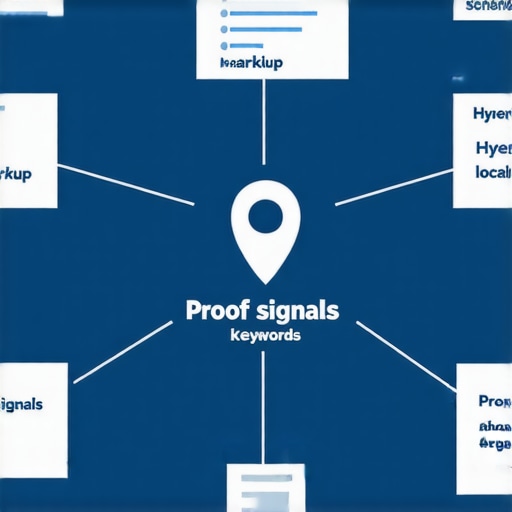
Diagram illustrating the integration of schema markup, hyperlocal keywords, and proof signals in a cohesive local SEO strategy, symbolizing the synergistic effect on map rankings.
Leverage Digital Evidence to Enhance Local Credibility
The utilization of authentic visual proof, such as high-resolution project photos, real-time video walkthroughs, and check-in data, significantly signals activity and legitimacy to Google. Dynamic proof points not only bolster your local authority but also improve user engagement metrics—an essential factor in Google’s ranking algorithms. Recent case studies reveal that profiles rich in diverse media assets outperform static counterparts, especially when combined with structured data markup.
Why Community Engagement Can Elevate Your Map Visibility
Active participation in local communities—through sponsorships, local events, and partnerships—generates earned media and high-quality backlinks that bolster domain authority. Moreover, community-centric content, featuring neighborhood success stories or testimonials, deepens your relevance within specific locales. Such grassroots efforts reinforce your brand’s local presence and trust, ultimately influencing map rankings through organic signals.
Is Your Reputation Management Strategy Mature Enough to Sustain Dominance?
Proactive review solicitation, especially targeting satisfied clients, ensures a steady flow of high-quality feedback rich in service-specific terms. Responding authentically to reviews, particularly negative ones, demonstrates customer care and reinforces E-A-T principles. Additionally, leveraging review generation tools and automated alerts helps maintain review volume and sentiment consistency—crucial for long-term local map success, as supported by recent SEO white papers from Moz and BrightLocal.
Insights That Separate Leaders from Followers
Harness Semantic Power
Top contractors leverage semantic SEO, embedding related keywords and natural language to match evolving search behaviors, especially voice and conversational queries, thereby aligning perfectly with Google’s understanding algorithms.
Quality Over Quantity in Proof Signals
Authentic, varied proof—such as real-time job photos, verified reviews, and location check-ins—significantly boosts Google’s trust, solidifying your map position in competitive local landscapes.
Content That Connects Deeply
Creating hyper-local stories—neighborhood success cases, community involvement, and local testimonials—builds emotional trust and enhances relevance in your target zones, making your profile the community’s go-to resource.
The Impact of Structured Data
Implementing schema markup like LocalBusiness schema clarifies your profile’s details for Google, improving rich snippet appearances and prominence on maps—an essential step for proactive optimization.
Consistent Feedback Loops
Analyzing performance data and refining your strategy regularly ensures you’re aligned with algorithm shifts, keeping your business at the top of local search results and ahead of competitors.