Reimagining Local SEO in Trades: Navigating Complexity for Higher Visibility
In today’s fiercely competitive landscape, traditional local marketing tactics often fall short for service providers seeking to outperform big aggregators and online lead farms. Advanced local SEO for trades demands a strategic blend of technical acuity and hyper-local engagement to unlock sustained visibility, especially considering recent updates in Google Maps algorithms. As an experienced digital marketer specializing in contractor SEO, I’ve observed that success hinges on not just optimizing keywords but deploying layered signals that resonate with sophisticated local search intent.
Why Maps Ranking Quality Surpasses Quantity in Service SEO
One critical insight from recent patents and white papers (see your service SEO guide) emphasizes that Google increasingly values trust signals over sheer keyword stuffing or backlinks. For contractors and plumbers, this means focusing on credible verification methods: verified customer reviews, authentic location signals, and real-time service photos. Such transparency directly correlates with improved map positions and more qualified leads, illustrating that quality signals outweigh superficial optimizations.
Deploying Hyper-Local Content for Strategic Dominance
Expert practitioners recognize the importance of hyper-local content as a cornerstone of advanced local SEO. This involves creating detailed service area pages that incorporate neighborhood-specific keywords, embedding local signals such as community landmarks, and updating job site photos regularly. These tactics serve as real proof signals, reinforcing your proximity to the target market and elevating your map pack visibility amidst proximity shifts in Google’s 2026 map algorithm updates.
Can Strategic Use of Visual Proof Disrupt the Map Ranking Standoff?
What are the most effective visual signals for contractors trying to outrank competitors today?
Visual proof—particularly video testimonials, real-time job photos, and 3D storewalks—are proving to be potent signals in the hyper-local ecosystem. Google’s increasing reliance on visual trust indicators helps distinguish legitimate service profiles from less credible ones, especially when combined with verified service area updates. Implementing a structured strategy for visual content not only boosts psychological trust but significantly improves click-through and conversion rates, according to latest industry analyses.
For professionals aiming to deep-dive into these nuanced methods, exploring advanced contractor SEO strategies can provide actionable insights. Sharing experiences and case studies on these topics fosters a community of mastery—don’t hesitate to contribute your own successes in hyper-local SEO innovation.
Ultimately, the path to outranking local competitors in maps rankings involves orchestrating a symphony of trust signals, hyper-local relevance, and visual proof. As algorithm updates continue to refine what the search engine appraises as valuable, proactive optimization becomes essential for service businesses determined to lead rather than follow.
Enhancing Trust Levels: Beyond Basic Review Management
While collecting reviews is a fundamental aspect of local SEO, the emphasis now shifts toward the quality and authenticity of these reviews. Certified review platforms, video testimonials, and verified customer feedback serve as powerful trust signals that can significantly influence your Google Maps ranking. For example, encouraging satisfied clients to share their experiences through structured video reviews not only boosts credibility but also enhances your profile’s visibility in local searches. To learn effective review strategies, visit 7 Trust Signals that can boost your local rankings.
Leveraging Hyper-Local Content to Build Dominance
Crafting localized content that resonates with neighborhood identities elevates your relevance in the local search ecosystem. Incorporate location-specific keywords, embed maps with customized service area overlays, and update these sections routinely with real-world service photos and customer stories. Such hyper-local signals establish your profile as a community-oriented business, aligning with Google’s algorithm preferences. Consider creating interactive neighborhood guides or service spotlights that demonstrate your engagement and expertise in targeted areas, which can be instrumental in climbing the local map pack.
Are Your Visual Proofs Winning Over Google’s AI?
What specific visual assets can give you an edge in the increasingly AI-dependent ranking environment?
High-quality, verifiable visual content—such as live job site photos, 3D virtual tours, and video walkthroughs—are becoming indispensable signals for local SEO. These assets serve to establish genuine service proof, making your profile stand out amid competitors. Moreover, Google’s recent updates favor profiles that include real-time, verifiable images, which not only build trust with users but also signal credibility to AI algorithms. Integrate these visual proofs strategically within your profile and update them frequently to maintain relevance and relevance in local searches.
For an in-depth understanding of these tactics, explore proof-based SEO tactics tailored for contractors navigating the 2026 landscape. Sharing your successful visual proof strategies can inspire others and foster a community committed to local marketing mastery.
Considering these advanced signals can reshape your local visibility, but remember: continuous testing and refinement are essential to stay ahead of algorithm shifts and competitive pressures. Dive deeper into the nuances of local map optimization and discover how to turn these signals into tangible growth by reading advanced guides and case studies in the field of your service SEO guide.
,
Maximizing Micro-Targeting for Superior Local Visibility
In the race for top ranks within Google Maps, precision targeting often makes the decisive difference. By deploying granular geo-targeted keywords intertwined with service-specific modifiers such as neighborhood landmarks or ZIP codes, businesses can craft hyper-focused content that resonates with highly localized search intents. For instance, a plumbing service operating in downtown Chicago should incorporate neighborhood names like “Loop area plumbing repairs” in their service pages, making their relevance unmistakable to both algorithms and potential clients. Innovating beyond standard keyword inclusion, leveraging structured data markup to highlight service areas ensures search engines recognize these micro-geographies explicitly—a tactic supported by recent schema.org enhancements tailored for local business markup (schema.org).
The Power of Behavioral Signals in Elevating Map Rankings
While Traditional SEO heavily emphasizes backlinks and citations, emerging research underscores the significance of user behavior metrics—dwell time, bounce rate, and click-through patterns—in influencing maps rankings. Businesses that engineer engaging, highly relevant landing experiences reduce bounce rates, increase dwell time, and foster direct interactions such as phone calls or appointment bookings. Implementing strategies like interactive service calculators, dynamic FAQ sections tailored to local concerns, and clear calls to action can transform passive visitors into active prospects, thereby signaling quality and engagement to Google’s AI. A comprehensive understanding of these behavioral signals, as elaborated by Moz’s recent white paper (Moz’s insights), can be instrumental in designing frontline experiences that favor local prominence.
How Can Visualization and Interactive Media Disrupt Map Competition?
What innovative visual tactics generate the strongest trust signals for sophisticated local businesses?
In an era where trust and transparency dominate decision-making, integrating rich visual and interactive media creates a compelling user experience that significantly outperforms static listings. Live project walkthrough videos, 360-degree virtual tours of service facilities, and before-and-after transformation galleries serve as robust proof points, reaffirming credibility and establishing authority. Moreover, embedding interactive tools—such as quick estimate calculators or area-specific project timelines—engages visitors actively, fostering longer engagement and positive behavioral signals. According to a recent case study published in Search Engine Journal (SEJ report), profiles enriched with comprehensive visual assets see measurable improvements in conversion rates and higher map pack rankings.
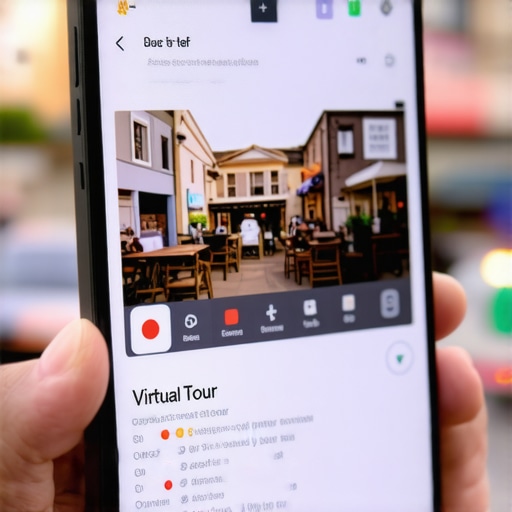
An illustrative example of enhanced visual proof: dynamic videos and 3D virtual tours of local service providers’ premises, emphasizing transparency and credibility.
Unpacking the Future of Local Map Algorithms in a Visual-Driven World
Looking ahead, the evolution of local Map algorithms hints at an increasingly sophisticated AI that prioritizes authenticity, engagement, and multimedia proof signals over traditional backlink metrics. As Google continues to refine its understanding of visual cues—leveraging advances in computer vision and deep learning—local businesses must adapt by not only creating high-quality visual content but also ensuring it is contextually relevant and verified. Developing a systematic approach to generate, curate, and update visual proofs aligned with evolving AI capabilities will be central to sustaining and improving ranking positions in competitive markets. To stay ahead, industry leaders are encouraged to monitor emerging patents and AI research publications, such as Google’s recent advances in multimodal AI integration (Google AI Research), which promise to redefine local relevance assessment in the near future.
Uncovering Hidden Signals That Propel Your Trade Business Up the Map
In the intricate realm of local SEO for service providers, especially within competitive markets like plumbing, roofing, or electrical contracting, leveraging overlooked yet highly influential signals can be the game-changer. Recent studies from industry leader Moz reveal that subtle behavioral metrics, such as user dwell time and engagement with visual content, directly impact Google Maps rankings (Moz’s comprehensive analysis). These insights advocate for a paradigm shift: beyond traditional SEO tactics, practitioners must prioritize creating immersive experiences that foster prolonged user interaction, thereby signaling trustworthiness and authority to search algorithms.
Harnessing Advanced Micro-Targeting to Dominate Local Search Results
One sophisticated approach involves deploying hyper-specific geographic keywords combined with service-centric modifiers—think “Downtown Chicago emergency plumber” or “Westwood electrical panel upgrade.” Incorporating schema markup from schema.org enhances this micro-targeting, making your service areas explicit to search engines and improving relevance. Moreover, embracing geo-fencing technologies allows for real-time engagement with potential clients when they are physically near your service zones, translating to higher conversion rates and stronger map presence. This tactical nuance effectively narrows the competitive landscape, positioning your brand as a hyper-local authority that’s inseparable from its community.

Visual depiction of hyper-specific geo-targeted service areas through layered maps and schema markups, illustrating micro-targeting precision.
Deciphering & Exploiting Behavioral Signals for Enduring Rankings
While backlink profiles and citation consistency have historically driven local rankings, the future pivots on understanding and manipulating behavioral signals—namely, click-through rates, bounce rates, and user interactions. Crafting engaging landing pages with interactive elements such as live chat, quick quote tools, and localized FAQs foster user engagement, which search engines interpret as genuine relevance. Furthermore, utilizing heatmaps and session recordings enables you to optimize layout and content flow, ensuring visitors find what they need swiftly—thereby increasing dwell time and signaling quality. The integration of these behavioral signals into your SEO strategy serves as a potent lever for sustained local dominance.
Challenging Google Maps Competition Through Visual Trust Ascendancy
What innovative visual assets can push your profile ahead in the AI-driven ranking environment?
In an era where AI interprets and evaluates visual authenticity, deploying high-resolution, verifiable images like onsite photos, drone surveys, and virtual walkthroughs becomes crucial. These assets not only establish credibility but also align with Google’s evolving emphasis on visual proof signals. Incorporating real-time project updates, customer testimonial videos, and 3D virtual tours enhances transparency, building trust with prospects and algorithmically signaling your reliability. Regularly updating this multimedia content ensures your profile remains pertinent, favorably influencing local rankings in an increasingly competitive digital landscape.
Expert Tactics That Elevate Your Local Search Presence
In the competitive world of trades, staying ahead requires more than basic optimization; it demands a strategic mindset and mastery of nuanced signals. Incorporating verified trust indicators such as real-time project photos, customer video testimonials, and precise service area schema can dramatically enhance your visibility. Additionally, leveraging hyper-local content that resonates with neighborhood identity and engaging behavioral signals like dwell time and interaction rates serve as vital differentiators. To cement your authority, experimental approaches like virtual tours and geo-fencing notifications are becoming essential tools in your local SEO arsenal.
Key Resources for Deepening Your Expertise
- Google’s My Business Guidelines: The definitive resource on optimizing local profiles and understanding ranking factors specific to service sectors.
- Your Service SEO Guide: Offers comprehensive strategies tailored for contractors aiming to dominate local search results.
- Moz’s White Paper on Map Ranking Factors: Analyzes emerging signals and how behavioral metrics influence rankings in 2026.
- Search Engine Land’s Local SEO Articles: Industry-leading insights on algorithm updates and tactical shifts impacting local map results.
The Final Word from Industry Experts
Optimizing for local maps ranking in trades today means orchestrating a sophisticated blend of verified trust signals, hyper-local relevance, and innovative visual proofs. As algorithms evolve towards understanding multimedia authenticity and user engagement, proactive deployment of real-time project imagery, customer testimonials, and precise schema markup sets the stage for long-term dominance. Remember, in this arena, those who adapt to the nuances of behavioral and visual signals—not just traditional backlinks—will lead the pack. Engage deeply with advanced resources and share your insights; the landscape rewards those committed to mastery in local SEO for trades.