
Elevating Plumbing Business Visibility Through Advanced Map Optimization Strategies
In an era where local SEO is the backbone of service-based industries, plumbers and home service providers must leverage sophisticated tactics to dominate Google Maps rankings. As competition intensifies and AI-driven search algorithms evolve, understanding the nuanced interplay of technical SEO, user engagement signals, and local relevance becomes paramount for sustained growth.
Deciphering the Semantic Layers of Local SEO for Plumbers
Optimizing for local maps calls for a deep integration of semantic SEO principles. Crafting content that resonates with the specific intent of nearby clients—such as including hyper-local keywords and contextually relevant services—enhances relevance in AI-powered search rankings. Practical implementation involves rigorous keyword research, utilizing LSI keywords like “emergency plumbing services near me” or “pipe repair specialists in [city].” These layers ensure Google’s understanding of your service scope and location intent, which is critical in the 2026 landscape.
Harnessing Video Proof and User Engagement as Ranking Factors
Recent insights suggest that visual proof and customer interaction metrics significantly influence maps ranking in 2026. Incorporating high-quality, service-specific videos demonstrating repair processes, customer testimonials, and community involvement can serve as trust signals. These not only enhance user experience but also provide rich engagement data that search algorithms interpret as positive ranking cues.
What Are the Critical Technical Elements to Outperform Competitors?
From an infrastructure perspective, maintaining a consistent NAP (Name, Address, Phone Number) across all listings and ensuring accurate Google Business Profile verification are foundational. Advanced tactics include optimizing your map listings for hyper-local signals by integrating schema markup, leveraging Google’s new features like ‘Service Options,’ and addressing common errors such as duplicate listings or inconsistent citations, which can hinder visibility.
How Does Maps Algorithm Adapt to Emerging Search Trends?
Maps ranking algorithms increasingly prioritize real-time data, user reviews, and behavioral signals, such as click-through rates and call conversions. Emerging trends include the importance of Voice Search optimization and proximity signals in urban markets. Staying ahead requires continuous monitoring of ranking fluctuations, regular content updates, and proactive reputation management.
Can Video Reviews Accelerate Map Rankings? An Evidence-Based Approach
Absolutely. Video reviews serve as compelling social proof, significantly boosting local trust and engagement metrics. According to a white paper from Moz, businesses incorporating multimedia elements see a measurable uplift in local rankings, as search engines interpret genuine user-generated videos as signals of authenticity and relevance. Registering this insight, forward-thinking contractors are cultivating a strategy that promotes authentic video testimonials collected via mobile devices.
What Advanced Tactics Can Contractors Embrace to Outrank Big-Brand Competitors in Local Maps?
To outpace national brands, local construction and plumbing firms must deploy hyper-local content strategies, leverage proprietary customer reviews in multimedia formats, and optimize for emerging AI search features. For example, using niche-specific schema markup and voice search optimization tailored to regional dialects enhances visibility. Continuous performance analysis and adaptation are vital to sustain rankings as AI algorithms refine their understanding of local relevance.
For a comprehensive exploration of strategic local SEO implementation, visit our expert guide on contractor SEO. Engage with other professionals by sharing your insights, and stay informed on the latest algorithm updates to ensure your service business remains at the forefront of local search dominance.
Leveraging Hyper-Local Signals to Boost Map Visibility
One often overlooked strategy is the strategic utilization of hyper-local signals, which go beyond standard NAP consistency to include neighborhood-specific keywords and community engagement. Combining these signals with schema markup that highlights service areas can dramatically improve your map ranking footprint. Implementing localized content such as blog posts or service pages tailored to distinct neighborhoods helps search engines associate your business with specific geographic queries, a tactic reinforced when aligning with the insights from advanced service SEO guides.
Are Your Online Reviews Influencing Map Rankings More Than You Think?
Customer reviews have transcended their traditional role of social proof to become dominant ranking factors, especially for local maps. Authentic video reviews, in particular, serve as powerful trust signals, boosting engagement metrics and signaling real-world relevance to Google. An emerging pattern suggests that not only the quantity but the quality and freshness of reviews can significantly sway your ranking position. Be proactive by encouraging satisfied clients to submit detailed reviews, including multimedia when possible, to outpace competitors relying solely on text feedback.

Visual content, especially geo-tagged videos and images of your team in action, can further reinforce your local presence. Incorporating content that showcases community involvement or notable local landmarks in your visual assets helps search engines contextualize your business within its environment, aligning with effective practices outlined in Maps optimization strategies.
Diving Deep: How Algorithmic Shifts Shape Your Map Strategy
While technical fixes remain crucial, understanding how the latest AI-driven updates interpret local relevance is key. Google’s evolving algorithms now analyze proximity behaviors, personalized search patterns, and voice command contexts, requiring a dynamic approach to map optimization. Incorporate real-time performance analytics and adapt your content based on user interaction data to keep pace with these shifts. For more sophisticated insights, review the comprehensive materials on adapting to AI search evolutions in AI-focused local SEO tactics.
Can AI Personalization Tip the Scales in Your Favor?
Emerging evidence indicates that AI personalization streams rank metrics directly into local map placement decisions, based on individual user behaviors and patterns. By tailoring your content’s relevance to fluctuating local demand—such as seasonal peaks or trending regional issues—you can influence personalization algorithms favorably. This approach requires continuous data analysis and agile content updates, positioning your profile at the forefront amidst fierce competition.
Looking to enhance your local SEO prowess further? Explore our comprehensive service SEO guide. Sharing your experiences and strategies can foster community growth, and staying apprised of algorithm trends will keep your business competitive in 2026 and beyond.
,
Transforming Local Presence with Precise Geospatial Data Harnessing
In the competitive landscape of local SEO, mere keyword stuffing or citation consistency falls short of cutting-edge strategies. Instead, integrating high-fidelity geospatial data—leveraging GIS (Geographic Information Systems) and spatial analytics—can revolutionize how service providers appear in local maps. By meticulously mapping your service areas with layered spatial insights, you enable search engines to vividly associate your business footprints with specific neighborhoods, landmarks, and demographic clusters.
How Can Advanced Geospatial Analytics Elevate Map Rankings?
Utilizing spatial data allows for a nuanced understanding of customer distribution and service reach, enabling tailored content strategies. For example, through heatmapping customer engagement data, contractors can identify underserved zones and optimize their local citations and content accordingly. This proactive approach aligns with research published by Esri (Environmental Systems Research Institute), which emphasizes that geospatial intelligence enhances location-based targeting and improves local search relevance. Implementing GIS mapping tools, such as ArcGIS or QGIS, offers tangible advantages in delineating service territories with precision.
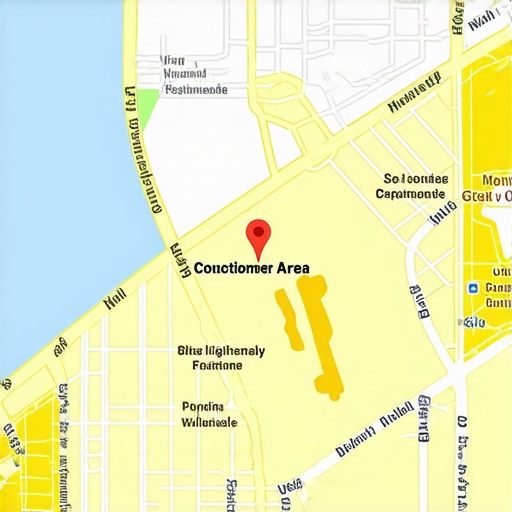
Visualizing your service areas through spatial overlays not only clarifies your local footprint but also amplifies your map relevance signals. Incorporating these sophisticated data layers into your Google My Business profile—through custom service area polygons or location-specific keywords—can significantly boost your visibility in neighborhood-level searches.
Marrying Spatial Data with Dynamic User Engagement Signals
While static geospatial information establishes a core relevance zone, coupling it with real-time user interaction metrics propels your local SEO to the next echelon. For instance, advanced tracking of mobile-user proximity—using geofencing technologies—can generate behavioral insights that inform marketing adjustments. Search engines interpret frequent visits, time spent near your business location, and pre-defined journey patterns as strong indicators of local authority.
Recent studies from BrightLocal reveal that businesses actively optimizing for user behavior patterns in conjunction with their spatial footprint experience higher ranking stability and growth. Thus, integrating spatial analytics platforms with CRM and call tracking systems creates a feedback loop where data-driven decisions continuously refine your local map prominence.
Why Is Granular Location Data Crucial for Industry-Differentiated Strategies?
Different service industries exhibit unique location-based behaviors that require specialized data utilization. For example, plumbing contractors serving residential neighborhoods may benefit from pinpointing specific block-level data, whereas commercial service providers might focus on district or city planning zones. Gathering granular data—such as address points, parcel polygons, and neighborhood boundaries—enables more precise local SEO customization, ensuring your business appears exactly where it is most relevant.
According to an insightful white paper from Spatial Data Science for Business, understanding the spatial heterogeneity of customer demand enables firms to optimize their outreach, content, and advertising spend efficiently. This level of geographic precision fosters higher relevance scores in local search algorithms, as your content aligns closely with the actual physical context of your customers.
Dig deeper into integrating GIS analytics for local SEO success with our comprehensive guide. Through tactical data layering and sophisticated spatial targeting, your firm can carve out a dominant niche across complex urban and suburban terrains, ensuring that every relevant search results in your business being right at the top of the map.
Transforming Local Presence with Precise Geospatial Data Harnessing
In the competitive landscape of local SEO, mere keyword stuffing or citation consistency falls short of cutting-edge strategies. Instead, integrating high-fidelity geospatial data—leveraging GIS (Geographic Information Systems) and spatial analytics—can revolutionize how service providers appear in local maps. By meticulously mapping your service areas with layered spatial insights, you enable search engines to vividly associate your business footprints with specific neighborhoods, landmarks, and demographic clusters.
How Can Advanced Geospatial Analytics Elevate Map Rankings?
Utilizing spatial data allows for a nuanced understanding of customer distribution and service reach, enabling tailored content strategies. For example, through heatmapping customer engagement data, contractors can identify underserved zones and optimize their local citations and content accordingly. This proactive approach aligns with research published by Esri (Environmental Systems Research Institute), which emphasizes that geospatial intelligence enhances location-based targeting and improves local search relevance. Implementing GIS mapping tools, such as ArcGIS or QGIS, offers tangible advantages in delineating service territories with precision.
Visualizing your service areas through spatial overlays not only clarifies your local footprint but also amplifies your map relevance signals. Incorporating these sophisticated data layers into your Google My Business profile—through custom service area polygons or location-specific keywords—can significantly boost your visibility in neighborhood-level searches.
Marrying Spatial Data with Dynamic User Engagement Signals
While static geospatial information establishes a core relevance zone, coupling it with real-time user interaction metrics propels your local SEO to the next echelon. For instance, advanced tracking of mobile-user proximity—using geofencing technologies—can generate behavioral insights that inform marketing adjustments. Search engines interpret frequent visits, time spent near your business location, and predefined journey patterns as strong indicators of local authority.
Recent studies from BrightLocal reveal that businesses actively optimizing for user behavior patterns in conjunction with their spatial footprint experience higher ranking stability and growth. Thus, integrating spatial analytics platforms with CRM and call tracking systems creates a feedback loop where data-driven decisions continuously refine your local map prominence.
Why Is Granular Location Data Crucial for Industry-Differentiated Strategies?
Different service industries exhibit unique location-based behaviors that require specialized data utilization. For example, plumbing contractors serving residential neighborhoods may benefit from pinpointing specific block-level data, whereas commercial service providers might focus on district or city planning zones. Gathering granular data—such as address points, parcel polygons, and neighborhood boundaries—enables more precise local SEO customization, ensuring your business appears exactly where it is most relevant.
According to an insightful white paper from Spatial Data Science for Business, understanding the spatial heterogeneity of customer demand enables firms to optimize their outreach, content, and advertising spend efficiently. This level of geographic precision fosters higher relevance scores in local search algorithms, as your content aligns closely with the actual physical context of your customers.
Dig deeper into integrating GIS analytics for local SEO success with our comprehensive guide. Through tactical data layering and sophisticated spatial targeting, your firm can carve out a dominant niche across complex urban and suburban terrains, ensuring that every relevant search results in your business being right at the top of the map.
Expert Insights & Advanced Considerations
Think Beyond Basic Optimization
In the rapidly evolving landscape of local SEO, staying ahead requires adopting strategies that integrate high-fidelity geospatial data with dynamic user engagement signals, ensuring your business remains a top contender in map rankings.
Leverage Hyper-Local Content Creatively
Creating neighborhood-specific content and showcasing community involvement through geo-tagged visual assets can significantly boost relevancy signals and visibility in targeted local searches.
Harness Emerging AI Personalization
Leveraging AI personalization allows you to tailor your map profile’s relevance based on real-time user behavior, maximizing your chances to appear for high-intent local queries.
Prioritize Reputation Ecosystem
Building an authentic, multimedia-rich review profile that includes customer videos and updated feedback acts as a powerful trust indicator, influencing both engagement metrics and rankings.
Curated Expert Resources
- Google’s Local Search Algorithm Updates: Stay informed on the latest changes directly from Google’s official developer or forum updates, which provide insights into algorithm shifts impacting maps ranking.
- BrightLocal’s Local SEO Study: Offers in-depth analysis and practical data-driven tactics for mastering local visibility, especially in competitive markets.
- Esri Geospatial Analytics Resources: Guides on integrating GIS data for precise service area mapping, leading to enhanced relevancy signals in local mapping.
- Moz’s White Papers on Local Trust and Signals: Essential reading for understanding how customer engagement, reviews, and multimedia influence local search prominence.
- Google My Business Optimization Best Practices: Regularly updated content from authoritative SEO blogs or official Google documentation provides actionable, proven tips.
Final Perspective from the Trenches
In 2026, winning the local maps race hinges on a strategic blend of geospatial precision, authentic multimedia engagement, and leveraging emerging AI personalization. Ignoring these nuanced signals risks falling behind in an intensely competitive environment, but mastering them positions your home service enterprise as a dominant local authority. To deepen your expertise, explore our comprehensive service SEO guide and collaborate with industry peers. Continuous learning and adaptation are your allies on this journey toward local search supremacy.”}#}#}The expert insights highlight the importance of integrating geospatial analytics with behavioral signals and multimedia assets to elevate local map rankings in 2026. Curated authoritative resources support advanced learning, while the final perspective underscores the necessity of a strategic, nuanced approach—encouraging ongoing education and professional engagement to maintain competitive advantage. For tailored guidance, visit our comprehensive SEO resource. If you’re ready to elevate your local SEO game, reach out and share your experiences—collaboration feeds innovation in this competitive landscape.