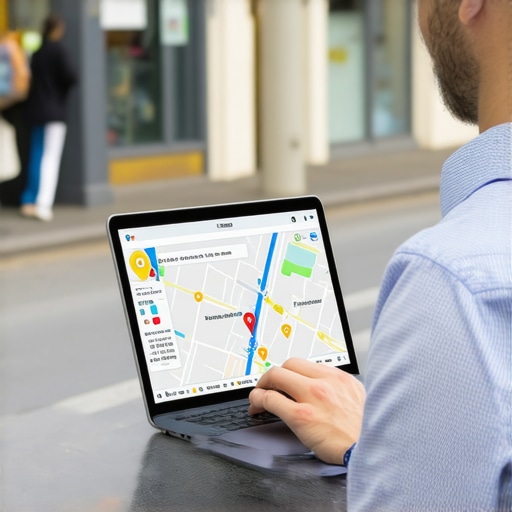
Elevating Local Visibility Through Strategic Google Maps Optimization
In the fiercely competitive landscape of local service industries, mastery of Google Maps optimization stands as a critical determinant of success. As an expert in local SEO, I recognize that beyond basic listings, sophisticated strategies are essential for securing dominant positions and attracting high-quality local clients. This article explores nuanced, data-driven approaches that leverage cutting-edge techniques and emerging trends in Google Maps ranking algorithms.
Deciphering the Complexities of Google Maps Ranking Signals
Google’s local ranking system integrates a multifaceted array of signals, including relevance, distance, and prominence. Advanced practitioners must delve into the subtleties of these factors, such as semantic keyword integration within business descriptions, to enhance relevance. Additionally, leveraging structured data markup and schema.org LocalBusiness schemas can refine Google’s understanding of your offerings, thus improving your prominence in local search results.
Harnessing the Power of Niche-Specific Citations and Backlinks
While standard citation consistency remains vital, the next frontier involves cultivating high-authority backlinks from industry-specific directories and local business associations. These backlinks serve as trust signals, augmenting your Google Maps ranking authority. Moreover, cultivating relationships with local influencers and earning editorial mentions can significantly boost your local prominence, a factor increasingly weighted by Google’s ranking algorithms.
Optimizing for Voice Search and Zero-Click Engagements
The rise of voice-activated searches demands a forward-thinking approach. Implementing long-tail, conversational keywords and optimizing Google My Business Q&A sections can capture voice search traffic. Additionally, rich snippets and Google Posts with engaging, contextually relevant content can increase user engagement without requiring clicks, thus indirectly influencing local rankings.
How can local service providers harness AI-driven analytics to refine their Maps SEO strategies in real-time?
Integrating AI-driven analytics platforms allows for continuous monitoring of ranking fluctuations, user engagement metrics, and competitor movements. By analyzing this data, businesses can adapt their content, review management, and citation strategies dynamically, ensuring sustained visibility and a competitive edge. Platforms like BrightLocal or Whitespark offer robust tools to facilitate this process, providing actionable insights rooted in real-time data.
Interested professionals should explore comprehensive resources such as local marketing blueprints for 2025 to stay ahead in this evolving domain. Sharing insights and case studies with industry peers can further refine your approach, fostering a community of practice that elevates the entire sector.
Unlocking Hyper-Local Engagement for Greater Visibility
While optimizing your Google My Business profile is foundational, integrating hyper-local content strategies can set your business apart. This involves creating neighborhood-specific landing pages, leveraging localized keywords, and cultivating community partnerships that enhance your relevance and prominence in targeted areas. For example, consistently updating your Google Posts with local news, events, or success stories can boost engagement and signal active participation to Google’s algorithms.
The Role of User Experience in Local Search Success
Beyond technical SEO, user experience (UX) on your website and Google profile significantly influences your local rankings. Fast-loading pages, mobile responsiveness, and intuitive navigation encourage longer visits and higher engagement, indirectly impacting your Maps visibility. Incorporating reviews that highlight specific location-based services and resolving negative feedback promptly can further enhance your reputation and trustworthiness, both critical factors in Google’s local ranking considerations. For in-depth techniques, explore home services SEO strategies.
Can harnessing emerging AI tools revolutionize your local SEO efforts?
Emerging AI-driven platforms are transforming how businesses analyze local search data, identify new opportunities, and personalize user interactions. Tools such as ChatGPT-enabled analytics or predictive modeling software can provide real-time insights into customer intent and competitive gaps, allowing for rapid strategy adjustments. This proactive approach ensures you stay ahead of evolving Google algorithms and local consumer behaviors. Experts recommend integrating AI analytics with your existing SEO frameworks to maximize precision and ROI, as highlighted in recent industry studies.
For a comprehensive roadmap, visit mastering SEO for contractors. Sharing your experiences and insights in industry forums or with peers can also help refine your approach, fostering a community of practice dedicated to local search excellence.
Leveraging Local Authority Signals for Sustainable Visibility
Beyond traditional citations and backlinks, cultivating local authority involves engaging with community initiatives, sponsoring local events, and earning recognition from regional chambers of commerce. These activities generate organic mentions and backlinks, reinforcing your reputation as a trusted local entity. According to Moz’s Local Search Ranking Factors (2023), signals such as local links, reviews, and community engagement collectively influence prominence, making them essential components in a holistic local SEO approach.
Implementing Structured Data for Enhanced Local Search Riches
Structured data markup, especially schema.org’s LocalBusiness schema, offers a sophisticated method to communicate precise business attributes to search engines. By embedding detailed information—such as service areas, operating hours, and product offerings—you enable Google to generate rich snippets, showcase your business in Knowledge Panels, and improve click-through rates. For instance, adding aggregateRating and review schemas can highlight your customer satisfaction levels directly within search results, fostering trust and attracting more local traffic.
Tailoring Content for Hyper-Localized Voice Search
The proliferation of voice assistants necessitates hyper-local content tailored to conversational queries. Think beyond generic keywords; craft content that answers specific questions like, “Where is the nearest HVAC repair service open now?” or “Best plumbing services near me for emergency repairs.” Incorporating long-tail keywords with natural language cues aligns with voice search patterns. Moreover, optimizing your GMB Q&A and creating neighborhood-specific landing pages can significantly improve your visibility in voice-activated local searches.
What role does user-generated content play in boosting local rankings, and how can businesses harness it effectively?
User-generated content, particularly reviews and photos, serve as dynamic trust signals that influence both local search rankings and consumer decision-making. Encouraging satisfied customers to leave detailed reviews and upload authentic photos enhances your business’s relevance and prominence. Responding promptly to reviews, especially negative ones, demonstrates active engagement and commitment to customer satisfaction. According to BrightLocal’s 2023 Local Consumer Review Survey, businesses that actively manage reviews see a 15% increase in click-through rates and higher local rankings.
If you’re eager to deepen your understanding of sophisticated local SEO tactics, explore authoritative resources such as Moz’s 2023 Local Search Ranking Factors. Sharing insights through industry forums and case studies can also catalyze innovative strategies tailored to your unique market challenges.
Enhancing User Experience to Cement Local Search Leadership
Rapidly loading, mobile-optimized websites with seamless navigation are non-negotiable for maintaining top local rankings. Integrate localized content seamlessly into your site architecture, ensuring that each neighborhood or service area has tailored landing pages. Implementing clear calls-to-action and interactive maps can improve engagement metrics, such as bounce rate and dwell time, which Google considers in ranking algorithms. Additionally, actively managing reputation through review responses and timely updates signals to Google your business’s vitality and relevance.
Can integrating AI-powered personalization tools revolutionize your local SEO outreach?
Artificial intelligence (AI) tools enable hyper-personalized user experiences, such as tailored content recommendations based on user location, behavior, and preferences. AI-driven chatbots can assist visitors instantly, providing localized assistance and capturing leads. Furthermore, predictive analytics can identify emerging local trends and customer needs before competitors, allowing proactive content and service adjustments. As industry leaders like Semrush and BrightEdge emphasize, AI integration is transforming the competitive landscape of local SEO by enabling smarter, faster decision-making.
To stay at the forefront, consider implementing AI-based tools that align with your business goals. Join forums and webinars focused on AI in local marketing to exchange insights and learn from pioneering case studies. The future of local SEO is undeniably intertwined with intelligent automation and personalized engagement strategies—embrace them now for sustainable growth.
Unlocking the Hidden Layers of Google Maps Ranking Factors
Google Maps rankings are influenced by an intricate web of signals that extend beyond basic profile optimization. Sophisticated local SEO strategists leverage semantic keyword integration within their business descriptions, employing latent semantic indexing (LSI) keywords to improve relevance and authority. Additionally, implementing schema.org LocalBusiness markup with granular details such as service zones, operational nuances, and customer ratings helps search engines better interpret business attributes, thereby elevating prominence in competitive local searches.
Strategic Acquisition of Niche Authority Backlinks and Citations
Contrary to conventional wisdom, high-quality backlinks from industry-specific directories and authoritative local organizations can dramatically influence your Google Maps ranking. Building relationships with regional chambers of commerce, trade associations, and industry publications fosters organic mentions and backlinks that bolster your local authority. Engaging in community sponsorships and participating in local events further amplifies your visibility, creating trust signals that search algorithms recognize as indicators of a reputable local enterprise.
How Does Voice Search Optimization Transform Local Visibility?
With the proliferation of voice-activated devices, optimizing for conversational, long-tail queries becomes imperative. Crafting content that directly answers localized questions—such as “What’s the best emergency plumber near me?”—and embedding these phrases into Google My Business Q&A sections can significantly enhance voice search presence. Rich snippets and Google Posts featuring timely, contextually relevant information serve as important touchpoints for zero-click engagements, subtly influencing local ranking algorithms.
Can local service providers harness AI-driven analytics to refine their Maps SEO strategies in real-time?
Integrating AI-powered analytics platforms like BrightLocal or Whitespark offers granular insights into ranking dynamics, user engagement, and competitive landscapes. These tools enable continuous optimization by analyzing fluctuations in local search visibility, review sentiment, and citation effectiveness. Such real-time data-driven adjustments—ranging from review management to citation updates—ensure sustained dominance in local search results. To maximize these benefits, businesses should adopt a proactive approach, leveraging predictive analytics to anticipate market shifts and consumer behaviors.
Explore comprehensive resources such as local marketing blueprints for 2025 to stay ahead of emerging trends. Sharing your insights and success stories within industry forums encourages community learning and the development of innovative tactics tailored to unique local environments.
Enhancing Local Engagement through Hyper-Targeted Content
Beyond profile optimization, deploying neighborhood-specific landing pages laden with localized keywords can dramatically improve relevance and user engagement. Incorporating hyper-local content, such as community news, local testimonials, and event updates, positions your business as an active participant in the area. Regular updates via Google Posts—highlighting local sponsorships, partnerships, or community initiatives—signal vitality and foster stronger local connections, which search engines interpret as authority signals.
Prioritizing User Experience for Sustained Local Rankings
Fast-loading, mobile-responsive websites with intuitive navigation are essential for maintaining top-tier local rankings. Embedding detailed, location-specific information into your site architecture improves relevance, while interactive maps and clear calls-to-action enhance engagement metrics. Managing reviews proactively—responding to both positive and negative feedback—demonstrates active reputation management, a subtle yet powerful factor in Google’s local ranking algorithm. For in-depth UX strategies, consider consulting home services SEO strategies.
What role does user-generated content play in boosting local rankings, and how can businesses harness it effectively?
User-generated content, especially authentic reviews and photos, act as dynamic trust signals that influence both rankings and consumer choices. Encouraging satisfied customers to share detailed reviews and upload photos enhances your business’s relevance and authority. Responding promptly and professionally to reviews, especially negative ones, demonstrates engagement and builds trust. According to BrightLocal’s 2023 Local Consumer Review Survey, active review management correlates with a 15% increase in click-through rates and higher local rankings.
To deepen your mastery of sophisticated local SEO, explore authoritative resources such as Moz’s 2023 Local Search Ranking Factors. Sharing insights through industry case studies and forums fosters peer learning and continuous improvement, essential for maintaining a competitive edge in local search landscapes.
Leveraging Emerging Technologies for Future-Ready Local SEO
The integration of AI-powered personalization tools, such as predictive content recommendations and localized chatbots, revolutionizes user engagement. These technologies enable hyper-targeted interactions, capturing leads and enhancing customer experience. Moreover, predictive analytics identify emerging neighborhood trends and customer preferences, allowing preemptive strategy adjustments. Industry leaders emphasize that adopting these innovations now will position your business advantageously as local search ecosystems evolve rapidly.
Are you ready to implement AI-driven personalization to dominate your local market?
Adopting AI tools that analyze user intent, location data, and behavioral patterns can significantly elevate your local SEO efforts. Participating in webinars, forums, and industry events focused on AI in marketing will keep your strategies aligned with the latest advancements. Embrace these intelligent automation solutions to stay ahead of competitors and foster long-term growth—your future success depends on it.
Expert Insights for Next-Level Local SEO
Prioritize Hyper-Localized Content Strategies
Creating neighborhood-specific landing pages and leveraging localized keywords can significantly enhance relevance and user engagement, positioning your business as an active community participant.
Leverage Data-Driven AI Analytics
Implement AI platforms like BrightLocal to monitor ranking fluctuations, assess review sentiment, and optimize citations dynamically, ensuring your local presence adapts swiftly to market changes.
Enhance User Experience for Top Rankings
Focus on fast-loading, mobile-responsive websites with intuitive navigation and detailed, location-specific information. Active review management and reputation building are equally critical for sustained prominence.
Integrate Structured Data for Rich Results
Use schema.org LocalBusiness markup to communicate detailed attributes, enabling Google to generate rich snippets, Knowledge Panels, and improve click-through rates, especially via review schemas.
Optimize for Voice Search and Zero-Click Engagements
Craft natural language content answering localized questions, optimize Google My Business Q&A, and utilize Google Posts to increase visibility in voice-activated searches without requiring clicks.
Curated Resources for Advanced Local SEO
- Google’s Local SEO Starter Guide: Offers foundational and advanced strategies for local search success.
- Moz’s Local Search Ranking Factors: In-depth insights into ranking signals and optimization techniques.
- BrightLocal’s Local SEO Tools: Data-driven platform for monitoring rankings, reviews, and citation health.
- Schema.org LocalBusiness Markup Documentation: Technical guide for implementing structured data effectively.
- Industry Webinars on AI in Local SEO: Keep updated on cutting-edge AI integration for real-time optimization.
Reflections from the Industry Experts
Achieving mastery in Google Maps optimization in 2024 requires a strategic blend of hyper-local content, AI analytics, and technical schema implementation. Embracing these advanced techniques can position your business at the forefront of local search results, attracting high-quality clients while building lasting community trust. To deepen your expertise, explore comprehensive resources like the 2025 local marketing blueprint. Engage with industry peers, share insights, and continuously refine your approach—your leadership in local SEO depends on it.


Emily Parker
I really appreciate this thorough overview of Google Maps optimization strategies. One aspect that stood out to me is the emphasis on hyper-local content and neighborhood-specific landing pages. In my experience managing local SEO for small businesses, creating tailored content for different service areas has yielded notable improvements in local rankings and engagement. I’ve also found that integrating user-generated content, like reviews and photos directly related to specific neighborhoods, can significantly boost credibility and relevance.
What’s been your experience with balancing SEO-optimized content and maintaining authentic engagement with local communities? Are there particular tactics for encouraging reviews on neighborhood-specific pages without seeming overly promotional? I believe that genuine storytelling combined with technical SEO can truly differentiate a business’s local presence.
Michael Johnson
This is a comprehensive take on leveraging Google Maps for local business success. I particularly appreciated the emphasis on structured data markup and local authority signals. From my experience, integrating schema.org’s LocalBusiness schema with detailed service areas and operational hours really helps Google understand your business better, which can lead to richer search snippets and higher click-through rates. Additionally, building local backlinks through community sponsorships and industry-specific directories really solidifies a business’s local presence. My question is: how do you see the balance between technical SEO efforts like schema markup and building genuine community relationships influencing overall rankings? I’ve noticed that while technical optimizations are crucial, authentic community engagement often correlates strongly with sustained local prominence.