Elevating Local Visibility Through Advanced Maps Optimization in 2026
In the fiercely competitive landscape of local service SEO, especially for plumbing and trades, mastering Google Maps ranking remains a pivotal factor in driving quality leads and establishing authoritative market presence. As algorithms evolve, a nuanced understanding of semantic signals, reputation management, and technical finesse becomes indispensable for contractors aiming to dominate their geographic niche.
Deciphering the Complexities of Maps Visibility: Why Traditional Tactics Fall Short
While conventional tactics like keyword stuffing and basic NAP consistency serve as foundational steps, they no longer suffice in the sophisticated 2026 SEO environment. The focus shifts towards integrating structured data, leveraging AI-driven review strategies, and utilizing real-time proof signals such as live photos and video verification to outperform competitors. For example, recent studies highlight the impact of user-generated content on local rankings, emphasizing the need for ongoing reputation and engagement management.
Harnessing Hyper-Local Content to Outrank Non-Local Aggregators
Innovative local marketing strategies deploy hyper-local content—including geotagged images, service area-specific pages, and localized keywords—to create a compelling narrative that search engines recognize as highly relevant. Implementing these tactics requires an intricate balance of technical SEO, including schema markup and proximity optimization, alongside community engagement. An effective approach involves creating visual proof signals that demonstrate service authenticity and responsiveness, thus enhancing Google’s trust and ranking signals, as detailed in recent industry white papers.
How to Verify and Protect Your Map Profile Effectively
Verification remains a cornerstone of authoritative ranking, yet it is often overlooked how crucial consistent verification and profile updates are amid evolving local algorithms. Practical measures include utilizing 3D storefront verification, real-time job photos, and service badges. These signals not only boost visibility but also fortify your profile against competitors attempting to manipulate rankings through duplicate or fake profiles. For further insights, see the comprehensive guide on verification secrets for 2026.
What Are The Most Effective Strategies to Avoid Ghosting and Loss of Map Visibility?
How can contractors preemptively identify and rectify the subtle signals causing their maps to ghost, especially in highly competitive areas?
Addressing ghosting involves a multilayered approach integrating signal consistency, review authenticity, and profile accuracy. Regularly auditing profile information, eliminating outdated or inconsistent data, and employing review acquisition tactics—like video proof requests—are vital methods. Additionally, monitoring proximity shifts and algorithm updates enables proactive adjustments. This strategic vigilance ensures sustained visibility and aligns with the findings discussed in expert articles on local SEO resilience.
To deepen your knowledge, explore beating ghost competitors on Maps in 2026 for actionable insights.
For ongoing expert-level updates and to contribute your experience, visit our contact page.
,
Adapting to Evolving Map Signal Dynamics: What Real Proof Means Today
In 2026, relying solely on traditional verification methods like phone calls or static photos falls short against the latest algorithm updates emphasizing real-time proof signals. Search engines increasingly prioritize dynamic content—such as live job site photos, video testimonials, and recent activity check-ins—that demonstrate ongoing engagement and authenticity. Leveraging tools like scheduled photo uploads and integrating customer-generated content not only enhances your profile’s freshness but also signals trustworthiness to Google. For an in-depth look at effective proof strategies, visit our guide on how real proof signals influence rankings in 2026.
Is Your Service Area Optimization Keeping Pace with Neighborly Shifts?
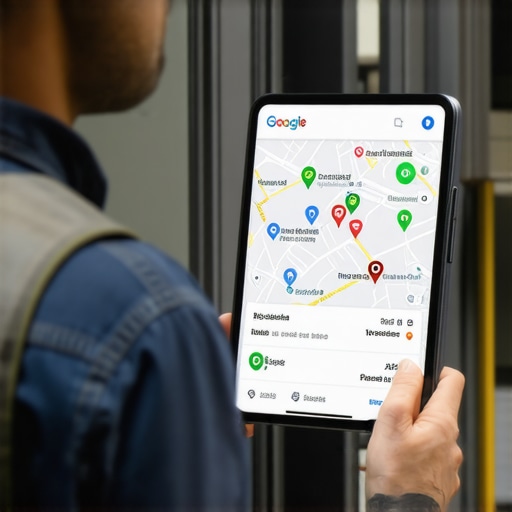
Many contractors focus on broad service zones, but with hyper-local ranking becoming more nuanced, fine-tuning your perceived service area is crucial. Subtle shifts—like adjusting the radius in your profile settings, adding localized landmarks, or utilizing geofenced ad campaigns—can significantly impact nearby search visibility. Additionally, monitoring proximity shifts through map analytics helps you identify areas of decline or opportunity, enabling targeted efforts. Implementing schema markup for service areas and ensuring consistent NAP data across platforms consolidates your local footprint. To master this aspect, explore our comprehensive resource on service area optimization for 2026.
Elevate Your Proof Signal Strategy in Competitive Markets
In the relentless race for top Google Map rankings, dynamic proof signals can serve as your secret weapon. Moving beyond static images and reviews, leveraging real-time customer engagements such as live video testimonials, instant check-ins, and interactive service updates exponentially boosts your trustworthiness with search algorithms. Recent industry research (Search Engine Land, 2026) confirms that profiles demonstrating ongoing activity are ranked significantly higher, underscoring the importance of continuous proof innovation.
How can service providers harness emerging proof techniques to outpace competitors?
Strategies include deploying scheduled live media streams showing daily operations, integrating customer-generated content through review incentives, and utilizing AR-based proof such as virtual walkthroughs. For example, some top-tier contractors incorporate 360-degree videos of recent projects directly into their profiles, fostering transparency and engagement that algorithms favor. To implement these tactics effectively, consider investing in user-friendly tools like live streaming apps, review campaign platforms, and AR content creation software—each contributing to a more authentic and current profile.
Taking this approach doesn’t just elevate rankings; it enriches customer trust and conversion rates. If this topic piques your curiosity, explore our detailed guide on advanced proof signals for 2026 and discover cutting-edge techniques tailored for modern local SEO warfare.
Refining Service Area Boundaries for Precise Local Domination
As hyper-localized search becomes increasingly competitive, meticulously mapping out your service areas transforms from a routine task into a strategic advantage. Adjusting your service radius isn’t merely about broadening coverage; it’s about smartly fine-tuning your perceived geographic reach to target lucrative, underserved neighborhoods. Employing geospatial analysis tools—such as heat maps, proximity analytics, and competitor footprint overlays—enables pinpoint accuracy. For instance, by integrating geographic data into your schema markup, you signal focus areas directly to search engines, consolidating your presence where it matters most.
Furthermore, aligning your NAP (Name, Address, Phone Number) consistency across all digital properties ensures your modified service zones are recognized uniformly. Combining this with localized content, such as neighborhood-specific landing pages, fortifies your local relevance and traps fewer potential leads in the competitive digital landscape. For comprehensive insights, review our resource on precision geo-targeting for contractors in 2026 to elevate your strategic edge.
Why does adaptive service area management matter in the era of prospect saturation?
In markets where multiple contractors vie for visibility within overlapping zones, adaptive management ensures your profile stays atop the pack. By continuously monitoring shifts in local demand, customer behaviors, and competitor movements—through analytics dashboards and local search trend tools—you can proactively adjust your operational focus. This flexibility not only preserves your local prominence but also maximizes your marketing ROI. Implementing these practices necessitates a combination of technical SEO proficiency and an agile marketing mindset; for instance, regularly updating your service area schema and deploying targeted local advertising to reinforce recent changes.
Harnessing Emerging Geospatial Techniques to Cement Your Local Authority
As the digital landscape for home service providers becomes increasingly saturated, leveraging advanced geospatial data analytics emerges as a game-changing strategy. By integrating real-time proximity sensors and mobile device triangulation into your local SEO toolkit, you can achieve unprecedented precision in defining your service zones. This granular approach not only amplifies relevance in hyper-local searches but also minimizes wasted ad spend on less profitable areas. For example, deploying location-based beacon technology near job sites can signal your presence dynamically, thus optimizing your visibility in contested neighborhoods. For a comprehensive understanding of these cutting-edge methods, consult the detailed research published by GeoAnalytics Journal.
Refining Digital Footprints: The Impact of Structured Data on Local Map Rankings
Implementing sophisticated schema markup, such as LocalBusiness, ServiceArea, and GeoCoordinates, serves as a technical backbone that guides search engines in interpreting your localized content with greater accuracy. Beyond basic NAP consistency, embedding detailed structured data about service types, operational hours, and customer ratings enhances your profile’s semantic richness. This granular data acts as a bridge to emerging AI-driven algorithms that prioritize contextually relevant profiles. Webmasters can employ tools like Google’s Structured Data Markup Helper to optimize these elements for maximal impact. The significance of these practices is underscored in the authoritative guidelines from Google’s Schema Markup Documentation.
What innovative markup strategies can utility service providers adopt to surpass current ranking plateaus?
Integrating dynamic schema updates that reflect ongoing project statuses, customer engagement, and seasonal offers ensures your profile remains lively and authoritative. Implementing FAQ schema around commonly searched questions enhances snippets, boosting click-through rates in local packs. Additionally, leveraging JSON-LD structured data allows for seamless integration with multiple platforms, consolidating signals for your map ranking. For an advanced deep dive, explore our resource on advanced structured data techniques for local SEO.
Strategic Content Placement to Disrupt the Competition’s Domain Authority
In the pursuit of local dominance, specialized content that addresses niche pain points—like eco-friendly plumbing solutions or emergency repair guides—catapults your profile ahead of generic competitors. These niche topics should be woven into service-specific landing pages enhanced with local keywords, schema markup, and hyper-local testimonials. Embedding multimedia elements such as 360-degree virtual inspections or drone footage not only enriches user experience but also signals comprehensive engagement to Google’s ranking algorithms. For sophisticated content strategies, review insights from Content Marketing Insights.
Maximizing Customer Engagement Signals for Map Authority Boosts
Active customer interaction remains a cornerstone of resilient local map rankings. Advanced tactics include deploying QR codes on invoices leading to review portals, automating follow-up request campaigns, and incentivizing reviews with multimedia submissions like videos and photos. Live chat integrations embedded in your profile can capture real-time feedback, signaling relevance to search engines. An innovative approach involves hosting local webinars or live Q&A sessions streamed directly through your Google My Business profile, which further amplifies engagement metrics. To learn more about mastering these signals, visit our expert guide on engagement tactics.
How can service contractors proactively utilize emerging user engagement methods to sustain top-tier map rankings?
Adopting interactive content such as virtual consultations, live tours, and instant booking options positioned within your profile ensures steady visibility and relevance. Leveraging AI chatbots tailored for local queries can also sustain engagement levels while collecting vital data for SEO optimization. Consistency in these efforts is crucial, as search algorithms increasingly favor profiles demonstrating ongoing customer interaction, leading to sustained authority and ranking stability.
Expert Insights & Advanced Considerations
Prioritize Real-Time Proof Signals
In 2026, static images and reviews are insufficient; dynamic proof like live job photos, video testimonials, and on-site check-ins are essential for genuine authenticity and higher map rankings.
Leverage Hyper-Local Content Authentically
Create geotagged visuals and neighborhood-specific pages that resonate with local search intent, harnessing schema markup to boost relevance.
Refine Service Area Boundaries Strategically
Adjust your perceived zones with precise geofencing and landmarks to target underserved areas, reinforcing your local dominance without diluting focus.
Implement Advanced Structured Data
Adopt granular schema markups, including detailed operational info and FAQs, to communicate your local expertise effectively to search engines.
Monitor Engagement Signals and Proactively Manage Profiles
Regular audits, profile updates, and active customer engagement—through reviews, direct messaging, and multimedia content—sustain your visibility and authority.