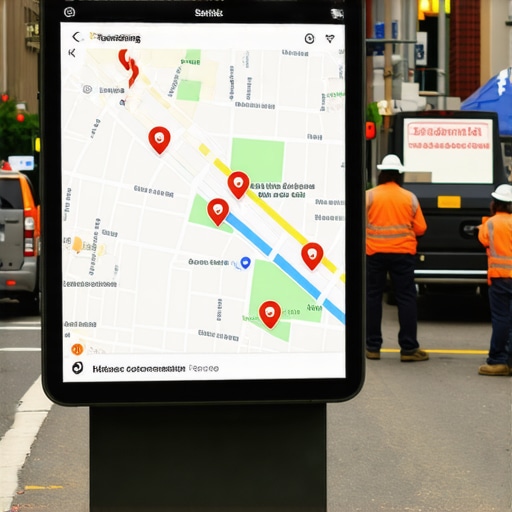
Elevating Local Visibility: A Strategic Perspective on Maps Ranking for Plumbers
In an increasingly competitive landscape, where local consumers rely heavily on Google Maps to find trusted plumbing services, understanding and implementing sophisticated SEO techniques becomes paramount. Effective maps ranking isn’t merely about keyword stuffing but fostering a comprehensive, experience-driven approach rooted in local relevance and authority enhancement.
Deciphering the Complexity of Maps Optimization in the Plumbing Niche
At its core, Google Maps ranking for plumbers demands a nuanced appreciation of local SEO dynamics, including citation accuracy, NAP consistency, and user engagement signals. Studies from reputable sources such as Moz suggest that local pack rankings are influenced by proximity, relevance, and prominence, which must be meticulously calibrated through tailored strategies.
Leveraging Authoritative Citations and Niche Data to Amplify Trustworthiness
Building a robust profile involves curating citations across high-trust platforms and ensuring consistency of business information. Integrating industry-specific keywords, like “emergency plumbing services” or “commercial pipe repair,” enhances relevance while aligning content with user intent. This dual focus on trust signals and keyword precision underpins superior map visibility.
How Can Advanced Link-Building and Schema Markup Accelerate Local Rankings?
Implementing schema markup for LocalBusiness and Service schema can significantly increase search engine comprehension, facilitating richer snippets and enhanced visibility. Coupled with strategic backlink acquisition from trade associations and local directories, these tactics foster social proof and backlink authority, elevating the plumbing business in local SERPs.
Personalization and User Experience as Ranking Signals
Google’s evolving algorithms increasingly prioritize user experience metrics, including click-through rate, review quality, and engagement levels. Encouraging satisfied clients to leave detailed reviews and replying professionally can considerably impact rankings. Moreover, ensuring your Google My Business profile reflects real-time updates enhances relevance and authority.
Are SEO Tactics for Maps Ranking Different from Conventional Local SEO?
While they share foundational principles, maps ranking demands an acute focus on geospatial signals and localized content optimization. Unlike traditional on-page SEO, it requires an emphasis on map-specific features such as service areas and location-specific keywords, integrating authoritative signals for heightened prominence.
To stay ahead in this competitive sphere, plumbing professionals must continually adapt by analyzing emerging SEO trends and leveraging authoritative resources like Moz’s insights on local SEO. Embracing a data-driven, experience-informed approach unlocks the potential to dominate Google Maps rankings effectively.
For further mastery, explore comprehensive guides such as the complete map ranking strategy for plumbers in 2025, and consider contributing your insights to the evolving field of local SEO expertise.
Reforging Your Local SEO Arsenal with Hyper-Targeted Content
To breakthrough the crowded local map rankings, service professionals must craft hyper-relevant content that resonates deeply with specific neighborhoods and community interests. This means developing localized blog posts, FAQs, and service pages that address unique community challenges, local slang, and region-specific concerns. Incorporating location-specific keywords naturally within your content not only signals relevance to search engines but also builds trust with local clients seeking tailored solutions. As highlighted in Moz’s recent insights, hyper-localized content can significantly influence proximity and relevance signals, boosting your visibility in the coveted map pack.
Harnessing the Power of Customer-Generated Content to Build Authority
Encouraging satisfied clients to share detailed reviews, photos, and testimonials can exponentially increase your online authority. Beyond simple star ratings, rich reviews that mention specific services or locations serve as user-generated proof points, reinforcing trustworthiness and relevance. Integrating review request strategies like follow-up emails or SMS prompts, aligned with best practices from leading SEO authorities, can amplify your profile’s credibility and attract higher rankings in nearby map results.
Integrating Emerging Technologies for Local SEO Dominance
Adopting tools like location-based analytics, voice search optimization, and augmented reality features can set your business apart. For instance, optimizing for voice queries—especially hyper-local ones—requires understanding natural language patterns and conversational keywords that homeowners and businesses use when speaking with voice assistants. Additionally, using AR to showcase projects can enhance user engagement and foster social sharing, indirectly influencing local prominence. As the landscape shifts, staying ahead requires embracing innovative tech and aligning it with your SEO framework.
Will Voice Search Revolutionize How Local Clients Find Your Business?
Voice search is rapidly transforming local discovery, demanding a reorientation of traditional SEO tactics. With over 50% of searches projected to be voice-based by 2024, ensuring your content aligns with conversational queries and natural language is critical. For instance, optimizing Google My Business descriptions and service pages for questions like “Who offers reliable plumbing emergency services nearby?” can position your business for featured snippets and voice results. Staying informed through trusted sources such as Moz’s guide on voice search can offer vital insights into adapting effectively.
To further elevate your local visibility game, consider exploring comprehensive resources like the complete blueprint for local marketing in 2025. These guides provide actionable frameworks that integrate the latest SEO trends with practical tactics tailored for contractors and service businesses.
How are you adapting your local SEO strategies to leverage the latest technological shifts? Share your experiences and insights in the comments below, and explore more advanced tactics at our comprehensive home services SEO guide.
Refining Your Local Signal Calibration for Sustainable Visibility
Achieving top positions in local maps packs hinges on precise calibration of multiple signals—distance, relevance, prominence—yet savvy SEO professionals recognize that these metrics are dynamic and often interconnected. Employing tools such as geospatial analytics platforms allows for granular insights into user movement patterns and neighborhood-specific search behaviors, empowering targeted adjustments to your SEO portfolio. Regular audits to ensure NAP consistency across all citations and structured data are crucial to maintaining trust signals aligned with Google’s evolving algorithms.
Innovating Content Strategies with Advanced Semantic Optimization
Going beyond basic keyword insertion, leveraging semantic SEO techniques helps you evade keyword stuffing penalties while reinforcing topical authority. Implementing latent semantic indexing (LSI) keywords — related terms and natural language variations — in your service pages and blogs significantly enhances relevance signals. For instance, integrating phrases like “emergency drain unclogging in Brooklyn” as a natural extension of core keywords increases the likelihood of appearing in hyper-local voice searches and contextually related queries, as supported by recent industry case studies published in Search Engine Journal.
What are the Latest Algorithmic Trends Affecting Map Rankings?
Google’s machine learning and AI-powered updates, like the helpful content update and BERT enhancements, underscore the importance of delivering genuine, user-centric content. According to Google’s official blog, these updates refine the understanding of user intent and context, meaning that superficial optimization no longer suffices. Instead, businesses must craft comprehensive, experience-rich content that addresses specific local pain points, showcases real-world expertise, and reflects community nuances. Keeping abreast of authoritative sources such as Moz’s Google algorithm watchdog is essential for adapting strategies proactively.

Sculpting Your Voice Search Optimization for Local Dominance
Voice search continues to reshape the landscape of local SEO, especially in the home services industry. To truly excel, consider the human conversational patterns prevalent in your service area—people tend to ask questions that are naturally phrased, such as “Who provides the fastest plumbing repair near me?” or “Where can I find a trusted HVAC technician in Austin?” Incorporating these question-based keywords into FAQs and optimizing your Google My Business description enables your business to appear in targeted voice results. As voice search adoption reaches critical mass, the importance of pairing keyword optimization with schema markup becomes apparent, ensuring your content is easily discoverable through voice queries.
Moreover, integrating structured data for Q&A snippets and leveraging Google’s Rich Results Test to validate schema implementation can elevate your local profile’s visibility, encouraging direct voice-enabled interactions, which translate into increased foot traffic and inquiries.
Building a Robust Reputation Ecosystem to Sustain Long-Term Map Rankings
Beyond technical SEO, your reputation management strategy functions as a pillar—transforming satisfied clients into advocates. Implementing automated review request systems, such as post-service SMS prompts or personalized emails, ensures a continuous inflow of fresh, keyword-rich reviews. Encouraging clients to mention specific services or community locations not only diversifies your review portfolio but also enhances relevance signals. As authoritative research indicates, businesses with consistently high review volumes and positive sentiment outperform competitors in proximity and prominence metrics.
Strategizing for Future Proofing in a Shifting SEO Environment
The only constant in local SEO is change, and forward-thinking strategies are vital to sustain visibility. Staying informed through trusted industry thought leaders—like Google’s webmaster central blog and specialized SEO analytics providers—allows the strategic refinement of your tactics. Incorporating AI-driven tools for predictive analytics and competitor benchmarking provides proactive insights, empowering you to adjust before fluctuations negatively impact your rankings. Furthermore, embracing innovative tech—such as augmented reality walkthroughs of plumbing repairs or AR-based quote estimates—can serve as unique differentiators in highly competitive local markets.
In this landscape of continuous evolution, how are you adjusting your local SEO blueprint to harness emerging technological opportunities? Share your insights and explore additional advanced tactics by visiting our comprehensive resource hub to stay at the forefront of industry advancements.
Leveraging Community Engagement for Authentic Map Visibility
Beyond traditional citation building, fostering genuine community relationships can significantly amplify your local profile. Sponsoring neighborhood events, participating in local charity initiatives, or hosting workshops not only create positive brand associations but also generate backlinks and social signals vital for top-tier map rankings. Google values real-world integration—so embedding your business into community fabric signals prominence that algorithms recognize and reward.
Harnessing Micro-moments to Capture Hyper-Localized Search Intent
In an era dominated by instant answers, targeting micro-moments—critical touchpoints when potential clients seek immediate solutions—can differentiate your plumbing service. Optimizing for voice queries like “quick leaky faucet fix near me” or “urgent drain unclogging today” through tailored content and schema markup positions your business to appear precisely at these decision-making junctures. Recognize these behavior patterns by analyzing local search trends and adjusting your content strategy accordingly.
Can Advanced Schema Markup Outperform Traditional SEO Tactics in Map Rankings?
Implementing comprehensive schema types—beyond Basic LocalBusiness—such as Service, Review, and Offer schemas—can create a semantic web of relevance that search engines parse with increased confidence. Embedded structured data can trigger rich snippets, showcase top reviews, and delineate specific services, thereby increasing click-through rates and perceived authority. As Google continues to refine its understanding through natural language processing, schema becomes a strategic pillar in an expert local SEO arsenal.
What Are the Most Overlooked Technical Factors That Could Sabotage Your Local Map Placement?
Technical missteps like inconsistent NAP data, slow website loading times, or unoptimized mobile experiences can silently erode your rankings. Conducting regular site audits with tools like Google Search Console and employing advanced crawl analysis ensures your technical foundation remains robust. Missing structured data or improperly formatted schemas can cause your business to be undervalued in local signals, regardless of content quality.
Stay ahead by integrating these advanced tactics into your routine—diligence now equates to sustained dominance in local search results. For tailored guidance, consult dedicated resources such as Moz’s comprehensive guide on technical local SEO excellence.
Utilizing Voice Search Data for Precision Service Optimization
Analyzing voice search query data reveals specific language patterns and regional dialects, enabling you to craft hyper-intentional content that matches how your community speaks. Incorporate natural language questions and long-tail keywords within your FAQ sections and GMB descriptions. This alignment not only improves your chances in voice-based local queries but also enhances overall content relevance, signaling authority in the eyes of Google.

Developing a Resilient Reputation Framework for Continuous Map Success
Consistent reputation management goes beyond garnering reviews—it’s about cultivating a proactive ecosystem of client engagement. Using advanced reputation monitoring tools, you can quickly identify and respond to emerging patterns—be it negative feedback or accolades—before they influence your rankings. Encourage clients to highlight localized service aspects, fostering a portfolio of rich reviews that reinforce your relevance and prominence in specific communities.
Future-Proofing Your Local SEO in the Age of AI and Personalization
Emerging AI algorithms aim to deliver highly personalized search experiences, which demands a more granular approach to local SEO. Investing in data-driven personalization—such as customized landing pages for service areas—and leveraging machine learning insights into consumer behavior trends ensures your strategy remains adaptable. Incorporate local-focused AI tools to predict search intent shifts and craft preemptive content solutions that preempt competitive erosion.
Engage with industry-leading platforms like Search Engine Land to stay updated on AI impacts, and regularly iterate your local SEO tactics to align with technological advancements. How are you integrating sophisticated AI insights into your local marketing approach? Share your experiences and discover novel tactics at our knowledge hub on AI-driven local marketing.
Cutting Through the Clutter: Elevate Your Local Visibility with Precision
In the fiercely competitive realm of local plumbing services, standing out on Google Maps demands more than basic optimization. It requires a nuanced blend of authoritative signals, innovative tech integration, and hyper-targeted content that resonates with your community’s unique needs. Embracing these advanced strategies ensures your business not only ranks higher but also builds enduring trust within your local ecosystem.
The Power of Semantic SEO and Structured Data
Leveraging semantic SEO techniques, including latent semantic indexing (LSI) keywords, enriches your content’s relevance. Implementing comprehensive schema markup—such as LocalBusiness, Service, and Review schemas—creates a web of machine-readable signals that enhance your visibility and appeal in rich snippets and voice search results. This dual approach fortifies your map ranking by aligning content with search intent and technical best practices.
Harness Local Community Engagement for Lasting Impact
Embedding your business into the fabric of the community through sponsorships, local events, and partnerships fosters genuine reputation signals. These activities generate authentic backlinks and social proof, which search engines interpret as signals of prominence and trustworthiness. The more your name becomes synonymous with community trust, the more your maps ranking benefits from these organic associations.
Optimize for Voice and Micro-Moments to Capture Instant Demand
With voice searches skyrocketing, tailoring your content for natural language queries like “Who offers reliable emergency plumbing nearby?” positions your business at the forefront. Focusing on micro-moments—those immediate decision points—allows you to provide swift, relevant answers that convert searches into bookings. This agility enhances both relevance and prominence in local search results.
Prioritize Continuous Learning and Technological Adaptation
Staying ahead in map rankings involves constant evolution. Engaging with authoritative resources such as Moz’s insights on local SEO and our comprehensive guide for 2025 keeps your tactics aligned with emerging trends. Integrating AI-driven analytics and automation tools ensures your strategies are proactive rather than reactive, securing long-term dominance.
Build a Reputation Ecosystem That Lasts
Beyond acquiring reviews, cultivating an active dialogue with clients through follow-ups and community participation solidifies your reputation. Rich, localized reviews mentioning specific services or neighborhoods amplify relevance. Employing reputation management tools can swiftly address negative feedback and promote positive narratives, continuously reinforcing your authority and ranking strength.
Final Perspective: Embedding Expertise in Every Click
Effective maps ranking for plumbers hinges on strategic depth—melding technical excellence, community trust, and innovative tech adoption. By integrating authoritative signals, hyper-localized content, and continuous learning, your business not only climbs SERPs but establishes a resilient local presence that endures. Remember, in the world of local SEO, the difference between being seen and being trusted often boils down to mastering these sophisticated, forward-looking tactics.