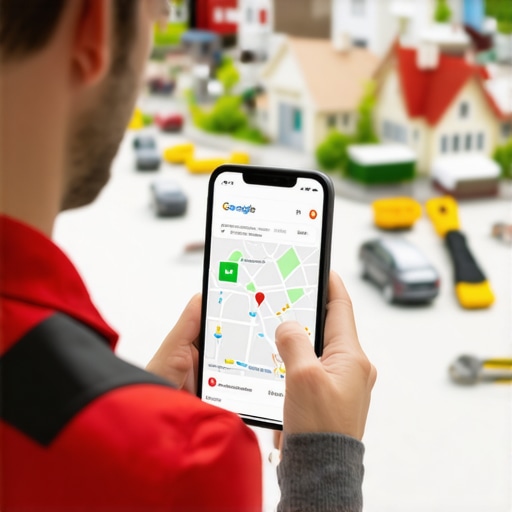
Elevating Your Local Presence: The New Frontier of Google Maps Optimization
In the fiercely competitive landscape of home services and contracting, local SEO, particularly Google Maps rankings, has become the definitive battleground for acquiring high-quality clients. Understanding the complex algorithms that govern Maps rankings and deploying advanced optimization strategies are crucial for professionals aiming to dominate their local markets in 2024.
Deciphering the Algorithmic Pulse of Google Maps for Service-Based Businesses
Google Maps ranking relies on a sophisticated blend of relevance, proximity, and prominence. For contractors and tradespeople, aligning your digital footprint with these factors involves meticulous citation management, review acquisition, and local signal enhancement. Unlike traditional SEO, Maps optimization demands a hyper-local focus, integrating schema markup, Google My Business (GMB) signals, and user engagement metrics.
How can local businesses leverage authoritative citations to boost Maps visibility?
Authoritative citations from niche-specific directories and high-trust platforms like Yelp or HomeAdvisor can significantly influence your prominence. Consistency in NAP (Name, Address, Phone Number) details across all listings fortifies your local relevance, and embedding schema markup on your website bridges the gap between online signals and physical location accuracy.
Harnessing Content and Engagement to Surpass Local Competition
Content tailored to local keywords, customer pain points, and service niches enhances relevance. Coupled with proactive review management and customer engagement, this creates a virtuous cycle that elevates your Google Maps ranking. Innovative tactics such as Google Posts and Q&A optimization also serve as signals demonstrating active local authority.
Technical SEO for Map Ranking: Beyond Basic Optimization
A technically sound website, optimized for fast load times, mobile responsiveness, and structured data, complements your local efforts. Ensuring your site’s architecture supports local keyword targeting and that your Google My Business profile is fully optimized with categories, services, and images is essential for a holistic approach.
What Advanced Techniques Are Shaping the Future of Local Map Rankings?
Emerging trends include leveraging AI-driven review solicitations, implementing local backlink strategies, and tapping into voice search optimization. These tactics reflect a broader shift towards a more contextually aware, user-centric ranking ecosystem, demanding that service providers adopt a multifaceted SEO approach.
For a comprehensive understanding of how to implement these strategies effectively, consult our detailed Home Services SEO Guide. To further refine your local marketing efforts, explore our blueprint for 2025 and connect with our experts for personalized strategies.
Unlocking Hidden Signals for Superior Maps Rankings
While most service providers focus on standard optimization tactics, tapping into lesser-known signals can give you a competitive edge. Factors like behavioral analytics, such as click-through rates and dwell time on your GMB profile, are increasingly influencing local rankings. Incorporating structured data, particularly LocalBusiness schema, further reinforces your relevance and can help Google better understand your offerings and location. Keep in mind that Google continually refines its algorithm, making it essential to stay ahead with innovative tactics.
The Power of Local Backlink Strategies
Backlinks from local and industry-specific websites remain a cornerstone of strong local SEO. Unlike broad link-building, local backlinks—such as partnerships with neighboring businesses or sponsorships—signal to Google your authority within your community. These links not only improve your domain authority but also increase local relevance, pushing your business higher in Maps rankings. To implement this effectively, consider leveraging community events, local sponsorships, and industry collaborations, and document these partnerships on your website to enhance your local link profile.
How can integrating AI tools optimize your review solicitation process?
AI-driven review management tools can personalize and automate the review solicitation process, increasing the likelihood of positive customer feedback. These tools analyze customer interactions and suggest optimal moments for requesting reviews, ensuring higher response rates. By systematically collecting fresh reviews, your business can maintain a vibrant reputation that positively impacts your Maps ranking. For more insights into review strategies, explore our Google Maps optimization tips that leverage review signals effectively.
If you want to implement these advanced strategies seamlessly, don’t hesitate to contact our experts for tailored guidance. Staying proactive with innovative SEO solutions is essential to maintaining your lead in local search results.
Decoding the Future of Google Maps Ranking Signals for Home Service Providers
As local SEO continues to evolve, the importance of understanding the nuanced signals that influence Google Maps rankings becomes paramount. Beyond traditional tactics like citations and reviews, emerging data points such as user interaction metrics, behavioral analytics, and AI-driven personalization are reshaping the landscape. For contractors aiming to stay ahead, integrating these cutting-edge signals into your strategy is no longer optional—it’s essential.
How can behavioral analytics redefine your local SEO approach?
Behavioral analytics, including click-through rates, dwell time, and bounce rates on your Google My Business profile, serve as real-time indicators of your relevance and authority in the eyes of Google. A profile that garners high engagement signals to Google that your business offers valuable, location-specific solutions. By leveraging tools like Google Analytics and advanced CRM integrations, service providers can monitor these behaviors, identify patterns, and optimize their profile content and local keywords accordingly.
For example, if data shows potential clients frequently click on your services but quickly leave without converting, it may indicate the need for more compelling calls to action or updated service descriptions that resonate with local needs.
Harnessing Local Link Building with a Community-Centric Approach
While backlinks from authoritative sites remain crucial, the focus is shifting towards hyper-local, community-driven link building. Establishing partnerships with neighborhood associations, sponsoring local events, or collaborating with nearby businesses creates contextual relevance that Google values highly. These local backlinks not only bolster your domain authority but also reinforce your prominence within your immediate geographic area.
Effective documentation of these partnerships on your website, combined with local content marketing initiatives, amplifies their impact. For instance, publishing a blog post about a recent sponsorship or community event signals active engagement, which Google interprets as a sign of local prominence.
What is the role of voice search in shaping future local SEO strategies?
Voice search is rapidly becoming a dominant querying method, especially for mobile users seeking quick, local solutions. According to a report from Comscore, over 50% of searches will be voice-based by 2025 (**source: Comscore, 2023**). Optimizing for voice involves adopting natural language keywords, answering common customer questions succinctly, and ensuring your Google My Business profile is thoroughly populated with service descriptions and FAQs.
Integrating voice search optimization into your local SEO strategy ensures your business remains discoverable in this emerging modality, capturing traffic that traditional text-based SEO might overlook.
Interested in deepening your understanding of these advanced tactics? Our comprehensive Home Services SEO Guide offers expert insights. Dive into our blueprint for 2025 and connect with our specialists for tailored strategies that push your local rankings to new heights.

Unveiling the Hidden Mechanics of Google Maps for Local Success
As the digital landscape evolves, savvy home service providers recognize that beyond basic optimization, sophisticated understanding of Google Maps’ nuanced ranking signals can dramatically elevate their local visibility. Delving into behavioral analytics, AI-driven personalization, and real-time engagement metrics reveals a layered ecosystem where every interaction counts.
How do behavioral analytics redefine your approach to local SEO?
Behavioral analytics—such as click-through rates, dwell time, and user engagement patterns—serve as vital indicators of your business’s local relevance. Advanced tools like Google Analytics and heatmap tracking enable contractors to interpret these signals, adapt content strategies, and optimize service descriptions dynamically. For instance, if analytics show visitors frequently abandon your profile after viewing specific services, it indicates the need for compelling calls-to-action or clearer local value propositions.
External Source: Moz’s comprehensive guide on behavioral signals in local SEO offers deep insights into how these metrics influence rankings.
Leveraging AI for Smarter Review Acquisition and Reputation Building
AI-powered review solicitation tools are revolutionizing feedback collection, enabling hyper-personalized and automated outreach that maximizes positive customer responses. By analyzing customer interactions, these systems pinpoint ideal moments for requesting reviews—like post-service follow-ups—significantly increasing response rates and review quality. An active, authentic review profile not only boosts credibility but also acts as a powerful ranking factor in Google Maps.
Explore our AI review management strategies to harness the full potential of your reputation-building efforts.
Community-Driven Link Building: The Future of Local Authority
While backlinks from authoritative sites remain foundational, the emphasis now shifts toward hyper-local, community-centric link building. Establishing partnerships with neighborhood associations, sponsoring local events, or collaborating on community projects creates contextual relevance that resonates with Google’s local algorithms. These links, combined with localized content marketing, reinforce your business’s prominence within your geographic ecosystem.
Document these collaborations on your website through dedicated blog posts and event pages to amplify their SEO impact. This approach demonstrates active local engagement—an increasingly influential ranking signal.
What role does voice search optimization play in maintaining your local edge?
With the proliferation of voice assistants, optimizing for voice search is no longer optional. Natural language keywords, concise FAQs, and detailed service descriptions tailored for voice queries ensure your business remains discoverable. According to Voicebot.ai’s latest research, over 50% of local searches will be voice-based by 2025, making this a critical frontier for competitive advantage.
Interested in elevating your local SEO game with these cutting-edge tactics? Our comprehensive SEO blueprint guides you through implementing these strategies effectively. Connect with our experts today to personalize your approach and secure your position at the top of local search results.

Unlock the Future of Local SEO with Advanced Tactics
As an industry veteran, I can tell you that staying ahead in local search requires more than just basic optimization. Embracing cutting-edge techniques like AI-driven review management, behavioral analytics, and community-centric backlinking can dramatically boost your visibility on Google Maps. Focus on integrating these strategies seamlessly into your marketing plan for measurable results.
Harness Data and Technology for Competitive Edge
Implementing tools such as Google Analytics and heatmaps allows you to interpret user engagement deeply. This data-driven approach helps refine your local keywords, optimize your GMB profile, and tailor your content to meet precise customer needs. Remember, in 2024, analytics are the backbone of effective local SEO.
Build Authority Through Authentic Community Engagement
Partner with local organizations, sponsor events, and produce localized content that resonates with your community. These efforts generate high-quality local backlinks and signal active prominence, which are crucial for Maps ranking. Authenticity and active participation are your best assets in establishing long-term local authority.
Leverage Voice Search to Capture Emerging Traffic
Optimize your content for natural language and FAQs, aligning with how voice assistants interpret queries. Given that over half of local searches will be voice-based by 2025, this tactic is indispensable for future-proofing your visibility. Incorporate voice-friendly keywords and ensure your GMB profile is comprehensive and conversational.
Expert Resources to Deepen Your Knowledge
- Google My Business Help Center: The definitive source for profile optimization, updates, and best practices.
- Moz Local SEO Guide: Offers comprehensive insights into behavioral signals and local ranking factors.
- Google Analytics Academy: Essential for mastering data interpretation in local marketing.
- Voicebot.ai Research: Provides the latest trends and strategies for voice search optimization.
- BrightLocal Blog: Focuses on community-driven link building and local SEO case studies.
Final Perspective from a Local SEO Authority
In today’s competitive landscape, expert-level local SEO for home services hinges on embracing innovative tactics that integrate data, community engagement, and emerging technologies like voice search. By prioritizing authentic connections and leveraging advanced analytics, your business can dominate Google Maps rankings in 2024. For tailored strategies and ongoing support, don’t hesitate to reach out to our team—your pathway to local dominance starts here.



Emily Johnson
I completely agree with the emphasis on behavioral analytics and voice search optimization. In my experience managing a local plumbing business, leveraging customer engagement data through tools like heatmaps and CRM insights has significantly improved our local rankings. Also, optimizing for voice has opened up new avenues for capturing quick, local queries, especially from mobile users. One challenge I faced was maintaining a consistent local link-building strategy with community partners. Have others found effective ways to streamline this process without it becoming too time-consuming? I believe that ongoing community engagement combined with smart data interpretation is key to staying ahead in Google Maps rankings. It’s interesting how the landscape keeps evolving with AI tools and real-time analytics, making a proactive approach more critical than ever. Would love to hear from others on how they balance technical SEO and community efforts to maximize local visibility.
Daniel Morrison
Reading through this insightful post, I can’t help but reflect on the importance of integrating advanced analytics into our local SEO strategies. As someone who’s been working within the landscaping industry for over a decade, I’ve seen firsthand how behavioral signals like click-through rates and engagement levels on Google My Business can dramatically influence rankings. A point that resonated with me is the need for hyper-local backlinking through community involvement. We’ve started partnering with local charities and participating in neighborhood events, which not only strengthens community ties but also boosts our local relevance and credibility. I’m curious—how do others effectively track and leverage these community-driven backlinks without it becoming overly complex or time-consuming? Also, with voice search becoming more prevalent, what are some practical steps small businesses can take to optimize their profiles for voice queries without extensive overhaul? It seems that embracing these emerging tech and engagement strategies is essential to stay competitive, especially in a crowded market.