Unlocking the Full Potential of Google Maps for Home Service Business Success
In an increasingly competitive local search landscape, home service professionals must leverage sophisticated Google Maps ranking strategies to outpace competitors and attract high-quality clients. As digital visibility becomes synonymous with market dominance, understanding the nuanced factors influencing Google Maps rankings is essential for industry experts aiming for sustainable growth.
Deciphering the Complex Algorithmic Layers of Google Maps Rankings
The Google Maps ranking algorithm integrates multiple signals—ranging from proximity, relevance, to prominence—that collectively determine local search outcomes. Advanced practitioners recognize that optimizing for these factors requires a deep integration of SEO, local branding, and technical precision. For instance, maintaining consistent NAP (Name, Address, Phone Number) data across authoritative directories reinforces credibility and enhances local relevance.
How do Google’s local ranking factors evolve with emerging AI and machine learning models?
Recent developments suggest that Google’s local algorithm increasingly leverages AI to interpret user intent and contextual relevance, demanding home service providers stay abreast of evolving SEO tactics. Regularly updating Google My Business (GMB) profiles, integrating customer reviews strategically, and utilizing schema markup are proven methods to align with these sophisticated models. For authoritative insights, consult the comprehensive Home Services SEO Guide.
Leveraging Niche-Specific Optimization for Local Client Acquisition
Beyond generic SEO tactics, mastering niche-specific signals—such as service categories, keyword intent, and localized content—can dramatically improve your Google Maps visibility. For example, a plumber focusing on emergency repairs should emphasize relevant keywords like “urgent plumbing services” combined with geo-specific terms. Such precision targeting aligns with Google’s emphasis on user satisfaction and personalized search results.
Enhancing User Engagement Metrics as a Ranking Signal
Google increasingly values user engagement metrics—click-through rates, review quality, and customer interaction. Home service providers must foster positive reviews, respond promptly to inquiries, and deliver exceptional service that encourages repeat business and positive feedback. These actions reinforce credibility and, by extension, improve local ranking positions.
What are the most effective ways to manage and leverage customer reviews to boost Google Maps rankings?
Proactively requesting reviews from satisfied clients, responding authentically to feedback, and highlighting positive testimonials on your website and GMB profile are critical steps. For a detailed strategy, explore the Effective Maps Ranking Strategies tailored for home service professionals.
By applying these advanced strategies, home service providers can significantly elevate their local search visibility, attract more qualified clients, and establish lasting dominance in their markets. Continuous learning and adaptation to Google’s evolving landscape are vital for sustained success. For further insights, consider exploring our comprehensive local marketing blueprint for 2025.
Harnessing the Power of Local Schema Markup for Superior Google Maps Visibility
One of the most underestimated yet highly effective tactics for boosting your Google Maps ranking is implementing detailed local schema markup. Schema markup helps search engines understand your business information more precisely, which in turn enhances your local search presence. By embedding structured data such as Business Name, Address, Phone Number, and Service Areas directly into your website’s code, you signal relevance and authority to Google. This can lead to improved visibility in local pack results, especially when combined with consistent NAP data across all directories. For an in-depth guide on schema implementation, visit Home Services SEO Guide.
Integrating Voice Search Optimization for Local Business Growth
With the rise of voice assistants like Alexa, Siri, and Google Assistant, optimizing for voice search is no longer optional. Voice searches tend to be more conversational and question-based, emphasizing local intent. To capitalize on this trend, craft your content around natural language queries such as “Who offers the best plumbing services near me?” or “Emergency HVAC repair in [Your City].” Incorporate long-tail keywords and FAQ sections that address common local queries. This approach aligns with Google’s evolving understanding of user intent and can significantly increase your chances of appearing in voice search results, further elevating your Google Maps rankings. For more insights, explore Your Service SEO Guide.
How can integrating emerging AI tools refine your local SEO and Google Maps strategies?
Emerging AI tools, such as AI-powered keyword research, review analysis, and content creation platforms, can provide a competitive edge by offering data-driven insights and automating routine tasks. For example, AI can analyze review sentiment to identify service strengths and weaknesses, enabling targeted improvements. Additionally, AI chatbots can enhance customer engagement on your website, increasing the likelihood of positive reviews and repeat business—both critical signals for local ranking algorithms. Incorporating these advanced tools can streamline your SEO efforts, making your strategies more adaptive and effective in the hyper-competitive local search landscape. For expert advice on integrating AI into your local marketing, consult Master Local Marketing Strategies.
Leveraging Geo-Targeted Content to Capture Hyper-Local Markets
Creating hyper-local content tailored to specific neighborhoods, zip codes, or districts can dramatically improve your local SEO. This approach involves developing blog posts, landing pages, and service descriptions that include geo-specific keywords and showcase community involvement or local case studies. For instance, a roofing contractor might publish a detailed guide on roof repair tips specific to winter conditions in a particular neighborhood. This not only boosts relevance but also positions your business as a trusted local authority. Furthermore, combining geo-targeted content with reputation management efforts—such as localized reviews and community sponsorships—can drive highly qualified local traffic to your Google Maps listing, increasing conversions. For strategies on local content marketing, check Local Marketing Blueprint for 2025.
Engage with your community by sharing your knowledge and success stories. Have you experimented with local content or AI tools? Share your experiences below or suggest topics you’d like us to explore further. Building a robust local SEO strategy requires continuous learning and adaptation—stay ahead by leveraging the latest techniques and insights from industry leaders.
Optimizing Your Local Schema Markup for Enhanced Google Maps Visibility
One often overlooked yet potent technique to boost your Google Maps ranking is the meticulous implementation of detailed local schema markup. Schema markup provides search engines with explicit cues about your business details, strengthening your relevance signals in local search results. Incorporating structured data such as Business Type, Operating Hours, Customer Ratings, and Service Offerings into your website’s code creates a rich network of contextual signals that Google interprets to improve your local pack positioning.
Experts recommend using JSON-LD format for schema markup, as it is easier to manage and less prone to errors. Consistency is key: ensure your NAP (Name, Address, Phone Number) details match exactly across all online directories and your website to reinforce authority. Regularly updating your schema markup to reflect new services, business hours, or location changes keeps your profile current and competitive.
For an in-depth understanding of schema implementation, refer to the authoritative Moz Schema Markup Guide. Proper schema deployment can significantly enhance your visibility in local Google Maps results, leading to increased inquiries and conversions.
Harnessing the Power of AI-Driven Local SEO for Competitive Advantage
Emerging artificial intelligence tools are revolutionizing local SEO strategies, enabling home service businesses to gain a decisive edge. AI-powered keyword research platforms analyze vast datasets to identify high-converting long-tail keywords tailored to your locale and niche. Additionally, sentiment analysis of customer reviews can reveal service strengths and weaknesses, guiding targeted improvements that resonate with your audience.
Chatbots integrated into your website can simulate human interactions, capturing lead information and providing instant responses to customer inquiries—further boosting engagement metrics that Google values. Moreover, AI-driven content creation tools can generate hyper-local blog posts or FAQs, positioning your business as an authoritative local resource while optimizing for voice search queries.
To explore these innovative solutions, consult experts like Search Engine Land’s AI in Local SEO Analysis. By adopting AI tools thoughtfully, your home service enterprise can adapt swiftly to Google’s evolving algorithms and dominate local search rankings.
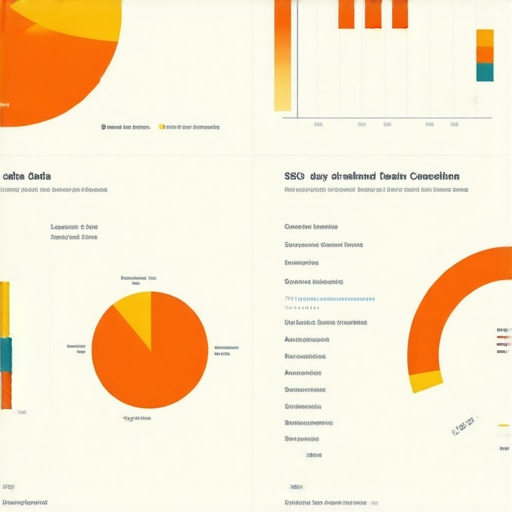
Image prompt: Advanced AI tools analyzing local SEO data for home service businesses, with charts, graphs, and digital interfaces.
Creating Hyper-Localized Content to Capture Niche Markets
Developing hyper-localized content tailored to specific neighborhoods, districts, or zip codes can significantly elevate your Google Maps ranking. This strategy involves crafting landing pages, blog articles, and service descriptions infused with geo-specific keywords and local references. For instance, a pest control company might publish a detailed guide on pest prevention strategies specific to the climate and pests prevalent in your city’s neighborhoods.
Integrating community engagement, testimonials from local clients, and showcasing local sponsorships further cements your reputation as a neighborhood expert. These efforts not only improve relevance signals but also foster trust within the community, encouraging positive reviews and word-of-mouth referrals.
For detailed guidance on local content marketing, explore Content Marketing Strategies for Local SEO. Remember, consistent updates and active community involvement are essential to maintain and grow your local authority.
What innovative local content strategies have you experimented with? Share your insights or questions below, and let’s continue elevating your home service business’s digital footprint.
Harnessing the Latest AI Innovations to Refine Local SEO Tactics
As artificial intelligence continues to evolve, integrating cutting-edge AI tools into your Google Maps optimization strategy can provide a competitive edge that is both scalable and precise. Advanced AI applications such as predictive analytics, customer sentiment analysis, and automated content generation enable home service providers to fine-tune their local SEO efforts with unprecedented accuracy. For example, AI-driven review analysis can identify specific service aspects that resonate most with your clientele, allowing you to tailor your offerings and messaging accordingly.
Furthermore, AI-powered chatbots and virtual assistants can enhance user engagement on your website, capturing high-quality leads and encouraging repeat interactions. These tools also assist in managing reputation by promptly responding to reviews and inquiries, which positively influences your local ranking signals. To explore practical integrations, consult resources like Search Engine Land’s AI in Local SEO Analysis for expert insights.
The Strategic Impact of Hyper-Localized Content in Niche Markets
Creating highly targeted, neighborhood-specific content is essential to dominate local search results and Google Maps rankings. Developing geo-faceted landing pages, blog posts, and case studies that highlight local community involvement, regional service variations, and location-specific testimonials can significantly boost your relevance signals. For instance, a landscaping company might publish a seasonal guide tailored to local climate conditions, positioning itself as an authority within that community.
Combining this content strategy with active participation in local events, sponsorships, and partnerships not only enhances visibility but also fosters community trust. Regularly updating your content to reflect seasonal changes, community news, and local regulations ensures your business remains top-of-mind in your service areas. For comprehensive strategies, refer to Content Marketing Strategies for Local SEO.
Optimizing Structured Data for Maximum Local Search Impact
Implementing detailed local schema markup remains one of the most effective yet underutilized tactics to improve Google Maps visibility. Advanced schema configurations—covering service details, operating hours, customer reviews, and geographic coordinates—serve as explicit signals to search engines, clarifying your business’s relevance and authority. Using JSON-LD format ensures compatibility and ease of management, especially when updating service offerings or business hours.
Consistency is paramount; ensure your NAP information matches across your website, Google My Business, and all online directories. Regular audits and schema updates will maintain your competitive edge. For authoritative guidance, consult Moz’s Schema Markup Guide for detailed implementation techniques.
Exploring Voice Search and Multimodal Optimization Techniques
With voice recognition technology becoming ubiquitous, optimizing for voice search is fundamental for local businesses aiming for prominence in Google Maps results. Focus on natural language queries, long-tail keywords, and comprehensive FAQ pages that address common local questions. Incorporating these elements ensures your business appears in voice search snippets, which often command prime placement in local results.
Additionally, multimodal optimization—combining visual content, voice, and textual cues—can significantly enhance user experience and engagement. This holistic approach aligns with Google’s evolving algorithms that prioritize user intent and context. For in-depth strategies, consult Your Service SEO Guide.
How can local businesses leverage emerging AI tools to stay ahead in Google Maps rankings?
Emerging AI solutions, such as AI-driven keyword research, review sentiment analysis, and predictive customer behavior modeling, enable hyper-targeted and adaptive SEO strategies. These tools can identify high-impact keywords, forecast local demand trends, and optimize your content and outreach efforts in real time, ensuring your business remains at the forefront of local search results. For strategic advice, explore Search Engine Land’s analysis of AI innovations in local SEO.
The Future of Local SEO: Integrating Multichannel Data for Holistic Optimization
To future-proof your Google Maps ranking efforts, integrating data from multiple channels—social media, review platforms, and local directories—creates a comprehensive picture of your brand’s digital footprint. Advanced analytics platforms can synthesize this data, revealing insights into customer preferences and engagement patterns that inform your local SEO strategies. Such holistic optimization ensures your home service business remains resilient amidst shifting algorithms and consumer behaviors.
Are you ready to elevate your local SEO game with these sophisticated techniques? Engage with our expert community and share your experiences or questions to continue refining your approach in this dynamic landscape.
Expert Insights & Advanced Considerations
1. Embrace AI-Driven Optimization
Utilize emerging AI tools for predicting local search trends, analyzing review sentiment, and automating content creation. These technologies enable hyper-targeted strategies that adapt swiftly to algorithm updates, maintaining a competitive edge in Google Maps rankings.
2. Prioritize Structured Data and Schema Markup
Implement comprehensive local schema markup in JSON-LD format to enhance search engine understanding of your business details. This explicit signaling can significantly improve your visibility in local packs, especially when combined with consistent NAP data across all directories.
3. Develop Hyper-Localized Content
Create city-specific landing pages and community-focused blog posts that incorporate geo-targeted keywords. Such content not only boosts relevance signals but also fosters trust and engagement within your local market.
4. Leverage Voice Search and Multimodal Optimization
Optimize for natural language queries and FAQ sections tailored to local questions. Incorporate visual content and voice-friendly formats to capture voice search traffic, elevating your presence in Google Maps results.
5. Monitor and Manage Reputation Proactively
Gather authentic reviews systematically and respond promptly to feedback. Highlight positive testimonials across digital channels to reinforce credibility and improve ranking signals.
Curated Expert Resources
- Google’s Official Local Search Quality Guidelines: Provides foundational principles and updates on ranking factors, essential for aligning strategies with Google’s expectations.
- Schema.org Documentation: Guides implementation of structured data to enhance local SEO visibility and rich snippets.
- Search Engine Land’s AI in Local SEO Analysis: Offers cutting-edge insights into AI integration for local search optimization, crucial for staying ahead in 2024.
- Moz’s Schema Markup Guide: Delivers in-depth technical instructions for schema deployment, vital for technical SEO mastery.
- BrightLocal’s Local SEO Tools and Resources: Supports ongoing reputation management, review generation, and local ranking tracking with expert-level tools.
Final Expert Perspective
In the evolving landscape of local search, mastering Google Maps rankings requires a sophisticated blend of AI-powered insights, meticulous schema implementation, hyper-local content, and proactive reputation management. Staying at the forefront demands continuous learning and strategic adaptation. Are you prepared to leverage these advanced techniques to dominate your local market? Engage with industry peers, share your insights, and explore authoritative resources to refine your approach and secure your competitive advantage in 2024 and beyond.