
Unlocking the Power of Google Maps Optimization for Home Service Success
In the fiercely competitive landscape of local home services, merely having a functional Google My Business (GMB) profile is no longer enough. Industry experts emphasize that strategic Google Maps optimization is paramount to dominating local search results, attracting high-intent clients, and scaling sustainably. This comprehensive exploration delves into advanced tactics, data-driven insights, and nuanced approaches essential for elevating your home service business to new heights in 2025.
Deciphering the Algorithmic Nuances of Google Maps Rankings
Understanding the intricacies of Google’s local algorithm is foundational. Factors such as proximity, relevance, and prominence interact dynamically. Recent shifts favor authoritative, multi-channel presence and user engagement metrics. For instance, Google’s 2025 local search updates reveal that review velocity and semantic consistency across platforms significantly influence rankings, especially in dense urban markets.
Advanced Citation and NAP Consistency Strategies
Building a resilient citation network with consistent Name, Address, Phone (NAP) data across authoritative directories remains a cornerstone. Yet, nuanced strategies involve leveraging niche-specific aggregators and structured data integration to bolster local relevance. According to recent white papers by Moz, citation accuracy correlates strongly with higher Google Maps rankings, especially in competitive sectors like plumbing or HVAC.
Optimizing Google My Business for Local Authority and User Engagement
A sophisticated GMB profile isn’t just about completeness; it’s about authority signals. Incorporate schema markup, regularly update high-quality images, and utilize Google Posts to foster engagement. Ensuring your primary keywords are woven naturally into business descriptions and service categories enhances semantic relevance. Additionally, encouraging detailed, keyword-rich reviews from satisfied clients can exponentially boost local prominence.
How Do Google Maps Signals Interact with Broader Local SEO Frameworks?
Mapping local signals seamlessly into a comprehensive SEO strategy involves integrating local content marketing, backlink profiles, and social proof. For instance, link-building efforts targeting industry-specific directories or local news outlets can reinforce authority. As outlined in our SEO guide, these multi-channel signals amplify your Map pack visibility, ensuring your business remains top-of-mind for local consumers.
What Are the Most Overlooked Google Maps Optimization Tactics That Drive Results?
Many underestimate the importance of local content customization, voice search optimization, and proactive review management. For example, creating localized landing pages with embedded Google Map embeds and schema can significantly enhance relevance. Additionally, optimizing for voice search queries that include natural language and local intent can unlock new traffic streams.
For a deeper dive into advanced local marketing tactics, explore our complete blueprint for 2025. Engaging with the latest industry insights and sharing your own expert experiences can further refine your strategy and accelerate your local dominance.
Harnessing User Engagement Metrics to Elevate Map Rankings
While traditional SEO focuses heavily on backlinks and keyword optimization, emerging trends highlight the significance of user engagement signals in Google Maps rankings. Metrics such as click-through rates, call button clicks, and direction requests serve as powerful indicators of local relevance and authority. Implementing interactive features on your Google My Business profile—like Q&A sections, booking integrations, and customer polls—can actively boost these engagement metrics. Additionally, leveraging Google Posts with compelling calls-to-action encourages direct interaction, increasing your profile’s prominence in local searches.
Can Your Business Leverage Local Semantic Clusters for Competitive Gain?
Beyond simple keyword stuffing, sophisticated local SEO strategies now emphasize creating semantic clusters—groups of related content that reinforce topical authority. For example, a plumber can develop a series of localized blog posts, FAQs, and service pages that interlink with one another, focusing on specific neighborhoods or plumbing issues. This approach not only improves relevance for a broader set of search queries but also signals to Google that your business is a comprehensive authority within your niche. According to Moz’s latest white papers, semantic relevance and structured data integration are crucial for dominating local search in competitive markets.
What Advanced Tools Are Essential for Tracking and Refining Local Map Strategies?
To remain ahead in local SEO, harnessing cutting-edge analytics tools is non-negotiable. Platforms like BrightLocal, Whitespark, and SEMrush provide granular insights into local search performance, review health, and citation consistency. These tools enable real-time monitoring of your Google Maps rankings, competitor analysis, and review management. Integrating these data streams into your ongoing strategy ensures continuous optimization and adaptation—especially as Google updates its local algorithm regularly. For a comprehensive understanding of these tools and how to deploy them effectively, visit our SEO guide.
Implementing these advanced tactics requires a nuanced understanding of local search dynamics, but the payoff can be substantial—more visibility, higher conversions, and sustained growth. Are you ready to refine your local map ranking approach and transform your lead generation strategies today? Feel free to share your experiences or ask questions in the comments below, and don’t forget to explore additional insights at our comprehensive local marketing resources.
Leveraging Local Semantic Relevance to Outrank Competitors in Google Maps
In the evolving landscape of local SEO, semantic relevance has become a game-changer. Beyond traditional keyword targeting, creating interconnected content clusters that reflect user intent and local nuances enhances your perceived authority. For example, a handyman service can develop localized blog content around neighborhood-specific issues, integrating long-tail keywords naturally. This approach not only boosts topical relevance but also signals to Google that your business is a comprehensive resource within your geographic niche, elevating your position in map rankings.
How Can Business Owners Effectively Build Local Semantic Clusters in 2025?
Strategically, it involves mapping out a network of related service pages, FAQ sections, and localized blog posts that interlink, creating a semantic web. Employing structured data markup like Schema.org can further reinforce these connections. According to Moz’s recent white paper, businesses that implement semantic clustering and structured data see a marked improvement in local search visibility, especially in competitive markets like roofing or electrical contracting.
To implement this effectively, conduct thorough local keyword research, identify common user queries, and develop content that addresses these with specificity. Using tools like SEMrush or BrightLocal can reveal search intent patterns and help tailor your content accordingly. Remember, consistency and relevancy across all digital touchpoints are key to building a robust semantic network that Google recognizes as authoritative.
Integrating Voice Search Optimization into Your Local Map Strategy for 2025
Voice search continues to reshape local SEO, demanding a shift in keyword strategies. Natural language queries, often longer and more conversational, require your content to adapt accordingly. For instance, optimizing for questions like “Where can I find a reliable plumber near me that offers emergency services?” involves creating dedicated FAQ pages that mirror these queries with detailed, keyword-rich answers.
Google’s voice recognition algorithms favor hyper-local, contextually relevant content. According to a study by Google, 59% of users perform voice searches for local information daily, emphasizing the need for businesses to optimize for voice. Incorporate long-tail keywords, natural language phrases, and structured data to enhance your chances of appearing in voice search results. Additionally, ensure your Google My Business profile is optimized for voice queries, including accurate categories and service descriptions.
What Are the Best Practices for Implementing Voice Search Optimization in Local SEO?
Focus on conversational content, question-based keywords, and concise, direct answers. Use schema markup to highlight local business details and services. Regularly monitor voice search performance via analytics tools like SEMrush Voice Search Analytics or BrightLocal’s Voice Search audit feature. As voice search integration deepens, keeping your content aligned with evolving user behavior will be crucial for maintaining top rankings.
For an in-depth guide on mastering voice search for local SEO, visit our comprehensive resource and stay ahead in the competitive local landscape.
Harnessing Advanced Data Analytics for Continuous Map Strategy Refinement
Data-driven decision-making is vital. Utilize advanced analytics platforms like CallRail, Local Falcon, or Google Data Studio to track real-time performance metrics such as click-through rates, call conversions, and user engagement patterns. These insights enable you to identify emerging trends, optimize underperforming listings, and tailor your content strategy dynamically.
For example, analyzing heatmaps of user interactions on your GMB profile can reveal which features attract the most attention. Integrating AI-powered tools can help predict future trends and guide proactive adjustments. As Google continues to refine its local algorithm, leveraging granular data analysis will be essential for maintaining and improving your Map pack visibility.
To deepen your expertise, explore authoritative case studies like Moz’s recent research on local ranking signals, and consider consulting with local SEO specialists who utilize these advanced tools to craft tailored strategies. Remember, continuous optimization based on robust data insights is the keystone to dominating local search in 2025 and beyond.
Harnessing Hyper-Localized Content Clusters for Unrivaled Map Rankings
As the local SEO landscape becomes increasingly sophisticated, the deployment of hyper-localized content clusters emerges as a pivotal tactic. By meticulously developing interconnected pages tailored to specific neighborhoods, service nuances, and user intents, businesses can significantly amplify their topical authority. This approach leverages semantic relevance to reinforce local dominance, utilizing structured data markup like Schema.org to signal contextual relationships to Google.
How Can Local Businesses Effectively Implement Semantic Clustering to Outrank Competitors?
Implementing semantic clustering involves creating a web of related content—service pages, FAQs, blog posts—that interlink with each other, emphasizing neighborhood-specific keywords and service nuances. Using advanced keyword research tools such as SEMrush and BrightLocal reveals detailed search intent insights, enabling content tailored to hyper-specific queries. Integrating structured data further enhances Google’s understanding of these topical relationships, fostering higher rankings in map packs. According to Moz’s latest white paper, such semantic strategies can lead to a substantial competitive edge in dense markets like electrical contracting or plumbing.
Embrace this method by mapping out the local service ecosystem and continuously refining your content based on performance analytics, ensuring your site remains an authoritative resource within your geographic niche.
Leveraging AI and Machine Learning for Predictive Local SEO Optimization
The integration of AI-powered analytics platforms such as Local Falcon, SEMrush, and Google Data Studio has revolutionized local SEO management. These tools parse massive datasets to identify emerging trends, user behavior shifts, and ranking fluctuations, enabling preemptive adjustments to your strategy. Machine learning algorithms can predict future local search patterns, allowing you to optimize your Google My Business profile and content proactively.
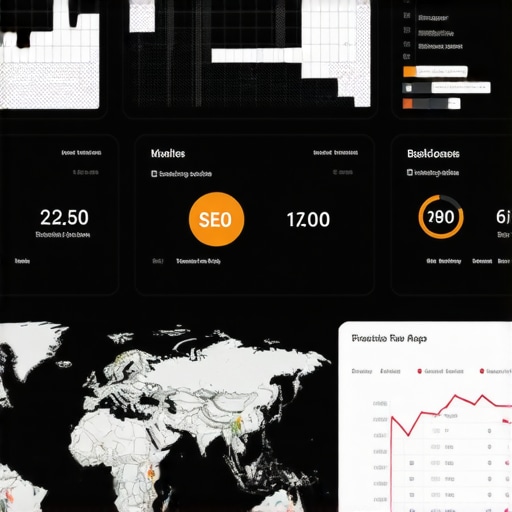
For instance, analyzing heatmaps and engagement metrics on your GMB profile can reveal which features resonate most with your audience, guiding content and feature enhancements. Moreover, AI-driven review sentiment analysis helps prioritize reputation management efforts, directly impacting local prominence. As Google’s algorithm continues to evolve, staying ahead with predictive analytics is not optional but essential for sustained local dominance.
What Are the Cutting-Edge Tools for Real-Time Local SEO Data Analysis and Optimization?
Tools like BrightLocal’s Local Search Rank Checker, Whitespark’s citation tracker, and Google’s own Search Console provide granular insights into your local visibility. Incorporating these into your routine enables real-time monitoring, competitor benchmarking, and swift tactical pivots. For example, leveraging these tools to analyze review trends and citation consistency can uncover hidden opportunities or risks that might impede your rankings.
To master these tools and strategies, consult authoritative resources such as Moz’s recent white paper on local ranking signals and consider collaborating with local SEO specialists who utilize these advanced analytics solutions. Continuous data-driven refinement ensures your business remains at the forefront of local search results, gaining a competitive advantage in your service area.
Are you prepared to harness the power of predictive analytics and semantic clustering to propel your local SEO efforts into the future? Engage with these insights, adapt your strategy, and dominate your local market with unmatched precision.
Expert Insights & Advanced Considerations
Semantic Clustering as a Competitive Edge
Implementing semantic content clusters around neighborhoods and service niches enhances topical authority and signals relevance to Google, elevating local map rankings.
AI-Driven Predictive Analytics
Leveraging machine learning tools like Local Falcon and SEMrush enables proactive strategy adjustments, ensuring your business stays ahead of algorithm updates and local search trends.
Hyper-Localization for Maximum Impact
Developing hyper-localized landing pages with embedded schema markup and localized keywords amplifies relevance and helps outrank competitors in dense markets.
Voice Search Optimization as a New Frontier
Optimizing for natural language queries and conversational keywords, especially in FAQ sections, positions your business to dominate voice search results in local areas.
Real-Time Data Monitoring and Strategy Refinement
Utilize advanced tools like BrightLocal and Google Data Studio for continuous performance tracking, enabling swift response to ranking fluctuations and review sentiment shifts.
Curated Expert Resources
- Moz Local SEO White Paper: Offers deep insights into semantic relevance and structured data importance for local rankings.
- BrightLocal’s Advanced Analytics Guides: Provides practical strategies for leveraging real-time data to refine local SEO efforts.
- Google’s Voice Search Optimization Resources: Essential for adapting content to voice-driven local queries and enhancing visibility.
- SEMrush Local SEO Toolkit: Comprehensive platform for tracking, analysis, and strategic planning in local search landscapes.
- Local Falcon’s Predictive Analytics Reports: Cutting-edge AI insights into future local search trends and ranking behaviors.
Final Expert Perspective
In the rapidly evolving realm of local SEO, mastering advanced Google Maps optimization strategies—such as semantic clustering, AI-powered analytics, and hyper-local content—can propel your home service business to unparalleled heights in 2025. Staying ahead requires a blend of technical precision, strategic foresight, and continuous data-driven refinement. For professionals committed to dominating their local market, integrating these expert insights and leveraging authoritative resources is essential. Engage with these sophisticated tactics, share your experiences, and explore further at our comprehensive SEO guide to elevate your local presence and outperform competitors.
Comments are closed.